


Chief Editor M. Neff
-
Posts
6,169 -
Joined
-
Last visited
Posts posted by Chief Editor M. Neff
-
-
Are "brutal" reviewers really good for you?

So what spurred this question? A friend recently said she had a "brutal critique partner" that could be relied on. It got me to thinking about brutal reviewers in my own experience who were worse than useless and actually destructive.
We need to keep in mind that the better an ms becomes, the harder such "brutal" critics are forced to dig for critique at all costs, inevitably focusing on matters of taste, e.g, "I don't like that character's personality..." as opposed to "I think this point could be made clearer by doing XYZ." You could put 10 of these brutal negative types in a room and they would shred an unpublished novel to pieces in their own special way. But if the exact same novel were actually written by a commercial author favorite of theirs, they would not only praise it but compete with each other to deliver the most positive, in-depth insight into the work. Their blurbs would shower Amazon with five stars. Perhaps a "however" now and then, but nothing that would ever approach the brutality of decimating the ms they believed unpublished.
Frankly, I've had experience with various coverage types in LA and fought huge battles with them over specific screenplays and manuscripts by writers known to me (two were clients) who they were attempting to annihilate, and I noticed, the more perfect the manuscript, the more vehement and extreme the critique. It was as if the good story and great prose infuriated them and made them all the more determined to find ways to chop at it. Of course, they made their living by using negativity as a substitute for authentic and insightful review, much like certain commercial book reviewers who go viciously negative in order to stand out in a crowd.
When looking for feedback on a fantasy manuscript I wrote two years ago, I purposely sought out three writers who I knew would rip me a big one (for various reasons), and all three did, but there were no commonalities. I figured that reasonably intelligent writers straining hard to be negative would find an issue if it really existed. It was weird to watch them strive to be as negative as possible over essentially petty things.
I once sent a very polished ms to some editors in Iowa who I trusted to put the final coat of paint on the top floor. Instead, they shredded the opening chapter of the ms in every inconceivable way. They strained to dissect sentences and nitpick "the real meaning" vs. the words actually used, and in a manner nothing short of bizarre. They even hated italics! Determined to be negative at all costs, the Iowa people didn't say one positive thing about any facet of the ms. When not provided their normal diet of necessary edits they simply picked and picked until they created a series of false negatives. The coverage people in LA, as I noted above, imitated this Iowa group. However, I couldn't help but notice the exact same editors, when courting a client for monetary reasons, fell over themselves being complimentary. Hmmmmmm...
In conclusion, if you must use reviewers, search for balanced personalities and look for commonalities. -
Though the blurb below was published in The Onion, it is nonetheless a good jumping off point for discussing how creative writing instructors or mentors should approach students whose stories or prose need extra help:
"CHARLOTTESVILLE, VA - In an effort to help his students develop inaccurate perceptions of their talents, University of Virginia creative writing professor Alan Erickson told reporters Monday that he takes the time to provide each and every one of them with personalized false hope. "Every student is different, and even though there may be 30 of them per class, I feel it's important that I make enough time to sit down with them individually to let them know they have a unique voice worth pursuing," said Erickson, explaining that he frequently extends his office hours and often stays after class to meet with students one-on-one to ensure they hear individualized, unfounded optimism about their writing and their prospects within the publishing industry. "It certainly adds a bit to my workload, but providing specific feedback and encouragement really has a huge impact on their confidence. Going that extra mile for your students is what inspires them to follow their dreams." The professor added that his efforts have yielded some notable results, asserting that a number of his most deluded former students have gone on to humiliating, short-lived attempts at writing careers."
_____________________________________
I have been in the presence of professional fiction-writing workshop leaders who have either falsely praised a writer or else avoided addressing flaws in their work--often leaving said flaws to be hopefully discovered by a member of the workshop instead. In this way, the instructor avoids having to face the writer and discuss the problem directly. He or she lets the group do most of the discovery and problem-solving analysis, thus disallowing the writer in question from focusing potential ire on the workshop leader.
Having been a workshop leader, I can tell you, the above approach would be a lot easier on me. However, even groups that are decently moderated (assuming the workshop leader actually understands not only practical creative writing but the commercial and literary publishing business--which is rare) must endure a good amount of poorly considered, amateurish advice issued from the well-meaning heads of the writers present.
Godspeed them all!
But what is a workshop leader to do in the presence of hit-and-miss advice and analysis flowing freely around the table? Various strategies exist, but by and large, he or she (if honest and knowledgeable) must be put in the position of tactfully contradicting much of what the writer group has said to each other (much of which already contradicts itself). And how is that possible in group dynamic situations that might not be conducive to such frank reality checking?
Answer: it isn't possible.
One can only hope for a group that is receptive. And falsely praising the work of poor writers only enables them to continue to fail. The workshop leader should note what works, and what does not, then delve into strategies for improvement.
Good writers are not born. They are made. -
I wish I’d known just how polished and perfected a work has to be to get published traditionally. I was lucky enough to get kernels from industry pros that allowed me to go back and hone my craft...http://2.bp.blogspot.com/-L1pXo4xN464/VcpPrfiFQ_I/AAAAAAAAAy8/twGxL0kcs_E/s200/jenny-milchman-square-web.jpg Jenny Milchman
How long did it take you to get published?
Here are my stats: 11 years, 8 novels, 3 agents, 15 almost-offers from editors. An almost-offer happens when an editor wishes to acquire a book, but gets turned down by her editorial board, or by people in the marketing or publicity departments, or even (as happened to me with my seventh novel) the publisher herself. My first published novel was the eighth one I wrote. And of course, there’s “long†in the non-numeric sense, too. It took an age, an epoch, forever. I thought I would never break through.
Why did you hang in so long versus, for instance, self-publishing?
When I started out, self-publishing as we now know it wasn’t an option. There was so-called vanity publishing, and it cost a chunk of change, and carried with it a stigma of failure. This was in the day of snail mailed query letters, which had to include an SASE. An SASE, for those not familiar with the term, is a self-addressed stamped envelope in which your rejection comes back. I gave a publishing talk at a college recently, and asked the audience if they knew what an SASE was. When I got blank stares, I asked if they knew what an envelope was.
But I digress. When I began things were different. The very first agent who offered to represent me asked if I had email. If! Then Amazon came along and changed the face of self-publishing. However, it wasn’t the greatest option for me. When emerging writers ask how to identify their publishing path, I tell them to close their eyes and picture a few dream moments. The ones that make them want to try and put their stories out there for the world to see versus just scribbling away in a garrett somewhere. For me those moments meant seeing my book on shelves. Bookstores and libraries have always been extremely important in my life. I wanted the support of booksellers and librarians as I became a published author, and one day I hope that my books will lend them support in return. For all that Amazon does, it can’t reproduce the experience of a face-to-face encounter or a bricks and mortar.
So for me traditional publishing was going to turn out to be the best path. The right path. But that won’t be true for everybody. I have always believed that how you publish is a highly individual decision.
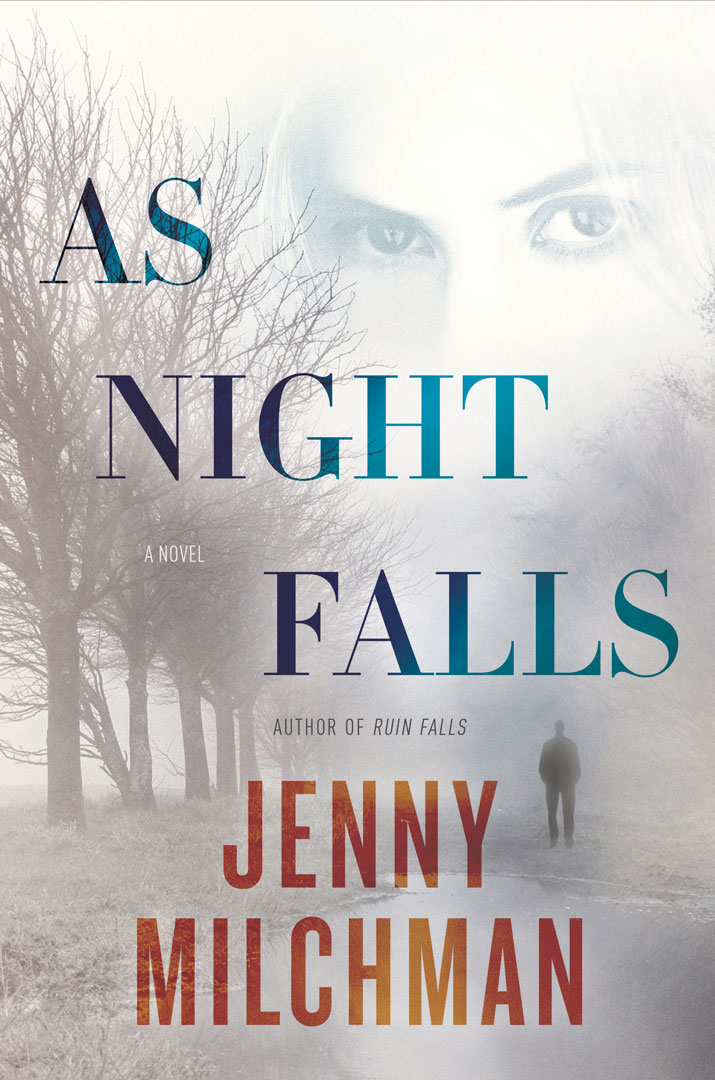
What one thing did you do as an "emerging author" that really made a difference and helped in getting published?http://2.bp.blogspot.com/-hUgIQafSjGY/VcpQxCeKbgI/AAAAAAAAAzI/NozjYqWRkIE/s320/as-night-falls-web.jpg Jenny Milchman's First Novel
I can’t whittle it down to just one thing, but I think I can manage 3 bullet points. Hope these are helpful!
- Attend as many author events as you can. Support both the author and the bookstore—I used to buy a book to read, and a second to give as a gift. The bookseller will come to know you long before you have a galley you hope she or he will read, and the author might give you a friendly smile, some advice, an agent referral, or even a blurb.
- Do things that connect writers and readers. Start a blog or a book club, depending on whether you prefer virtual or face-to-face.
- Follow agents on Twitter and Tweet their advice.
- Hold a literary series at your local library.
- Frequent Facebook groups and post interesting resources and helpful tidbits for members. You will be making a place for yourself in a world that is big enough to include your own work one day.
I basically believe that monies should flow toward the author, not away, but attending a conference became a pivotal piece of my own publishing journey. Determine whether you want to focus on craft or business in making your decision. If it’s the latter, look for conferences that include agent panels, pitch sessions, or talks by editors. Among others, I heartily recommend Algonkian events in New York and elsewhere.
What one thing did you do that worked against your getting published?
I thought my work was ready long before it really was. Rather than seek out sources of feedback and additional reads—writers groups, workshops, classes, retreats, even a freelance editor—I kept squandering chances with agents. I wish I’d known just how polished and perfected a work has to be to get published traditionally. I was lucky enough to get kernels from industry pros that allowed me to go back and hone my craft, but I think I could’ve sped up the whole process—it didn’t have to take eleven years—if I hadn’t been handcuffed by the slow waiting time when you’re querying and submitting.
Now on your third novel, if you had it to do all over again, would you still keep trying for so long? In other words, is it all you hoped it would be?
I would try for twenty-two years. It’s all I hoped it’d be and more.
_____________________________
Jenny Milchman’s third novel, As Night Falls, is an Indie Next Pick and a summer release. Her first two books won awards, inclusions on Best Of lists, and critical acclaim. Find Jenny on the road, thanking all those people who helped her along the way, by checking out what Shelf Awareness calls the world’s longest book tour.
View the full article -
by Michael Neff
At a conservative estimate, upwards of 250,000 writers in the U.S. are currently struggling to write or find an agent for their first commercial novel or memoir. If you understand this business, you also know why an enormous percentage are unable to make it happen. Below are the top seven reasons why otherwise passionate writers will join the 99.9% never to become commercially published.
1. INADEQUATE WRITING SKILLS AND STORYTELLING PROBLEMS
In the case of the former, the writing itself does not display the energy, creativity, and polish necessary to convince an agent to go deeper. This is perhaps the number one cause of failure. Usually, the writer is not aware--or at least, not sufficiently aware to enable productive change. Perhaps this is a first stab at fiction, she or he not realizing that journalism or other nonfiction writing ill prepares one for the challenges of competitive commercial narrative. Obviously, the writer does not know a good editor or reader, and therefore, has never received truly helpful crit. Or perhaps an ego obstacle is present, a father to the "birthed baby" phenomenon: the writer has produced a passage, a character, or scene they can't possibly do away with. It is sacred to them. So it remains, defacing the narrative like a major pothole, jolting agents and publishers alike each time they meet it.
In the case of the storytelling issue, the writer may actually be accomplished at connecting the word dots. The agent gives it a good read then backs off. Why? Well, maybe because the story goes nowhere. It flattens out and stays that way. Where is the inciting incident? The first major plot point? The story is eventually uninteresting or perhaps even confusing. Just recently a fine writer handed me sample of his ms. His prose skill kept me turning, but finally, I bogged down on characters who spun endlessly in place, who never really took action or engaged in any reaction worth noting.
2. FAILURE TO ADEQUATELY UNDERSTAND THE MARKET
We are not talking about trend chasing... Virtually every time I speak with a student I discover that she or he has not sufficiently researched their market. In other words, they don't have a clue as to what types of first novels are currently being published in their chosen genre (assuming one is chosen). Why is this important? Because the first novels provide the writer with a concept of what the market is looking for. Also, it helps steer the writer away from starting a project that will be DOA on arrival due to being way too deja-vu or trope heavy. Far too many writers make the Tom Clancy mistake, i.e., they attempt to emulate a huge author, falsely believing it will get them published. They don't understand that author gods like TC could get away with terrible literary crimes in their old age and still become published. Instead, the writer must examine first novels published in their chosen genre over the past two years: investigate story types, settings, protagonists, etc. The research always yields productive results because first novels are the weather vane for where the market is going, and on more than one level.
Click for Events and Programs
3. NARCISSISM TIMES TEN EQUALS BOTTOM FEEDING
The writer is puffed, living in a state of I-know-better. She or he is therefore incapable of successfully editing their work. Friends, relatives, or bad agents have told them their writing is good, and their story interesting (they dare not do otherwise!)... Perhaps the writer is a big success in their other career, so why shouldn't they also know-it-all when it comes to writing? OMG.
We once had a millionaire venture capitalist hand us their 15 page synopsis and the first few pages of their novel. The synopsis was absurdly long and unable to summarize the story in any coherent way; and the first couple of novel pages needed a good line editing because the prose was inadequate and one tended to speedbump over at least one awkward sentence per paragraph. Of course, these facts were unknown to the venture capitalist. He presented us the work with a grand TA DAH!, expecting a corroboration. Well, of course, irritation set in when we tactfully pointed out shortcomings. He also did not believe us when we explained that the vast majority of agents would not, repeat NOT read that 15 page synopsis regardless (and if they did, the novel was DOA). Later, he went on to self publish and sell a total of 136 copies at last count.
4. INCREDIBLY BAD ADVICE SPELLS DOOM
Whether the source is an article, a friend, or a writer's conference, the writer has been told something that steered them wrong, or built a false expectation, or made them believe a man-bites-dog story will happen to them. For example, a writer with a manuscript in need of a good final editing told me, "Not to worry. The publishing house editor or the agent will complete the edit for me." I explained that would not happen--not for a first timer with zero track record. Another piece of incredibly bad advice often heard from egoistic writers or agents: "Writers are born, not made." This is simply not true. A clever, determined writer who shelves the ego and seeks to research and learn their craft will succeed. Tenacity wins. See our Top Ten Worst Pieces of Bad Writing Advice.
5. THE COMING OF MORALE LOSS
The most common form of morale loss occurs at such time the writer finally realizes their writing is not nearly as good as they suspected. The writer returns to a favorite slice of writing, seeking to admire, build confidence, only to discover their favorite slice has gone stale and offensive. So what happened? Writers who fail to understand that such realizations are necessary watersheds (and they happen to all writers!) and indicators of growth, become disillusioned. They quit.
The second biggest cause of morale loss results from no success in selling an agent on your novel. It's been dragging on for years. The novel ms has been shopped around. No one is buying and feedback is confusing. Or perhaps the novel ms is resting like a one ton anchor on your desk (waiting for neck) eight years later and still not ready despite several restarts and who knows how many total drafts.
If any of the above is the case, welcome to the club! Buy yourself a drink and get back to work.
6. IMPATIENCE EQUALS LOTS OF WASTED POSTAGE
The story might even be pretty good, fairly original, and the writing likewise, however, the writer is impatient and sends the ms out too soon. Flaws exist in the plot, character development, and God knows what else. No one knew! The writer's crit group was mistaken! Agents and editors will stumble a few times before reaching for a rejection slip. Most likely, the writer will never know why. She or he will just keep sending out the same damaged ms again and again.
7. INSUFFICIENT CREDS TO PROVIDE COMPETITIVE EDGE
Credentials, platform, prior publications--these things can matter, especially for literary/upmarket writers. The vast majority of first novel writers do not get work published in viable short fiction markets. This makes it even more difficult to land a good agent. Many agents will not look twice at a writer whose cover letter does not demonstrate a track record of some type. A publishing record, even a meager one, helps convince publishers and agents that you have what it takes. Even in the mystery/thriller and SF/F markets, you go to the top of the stack if you've published shorts in reputable journals. Contest wins, past mentors, certain types of nonfiction, and participation in writing programs can also matter, depending on the genre and marketing desires of the publishing house.




13 Ways For Authors To Avoid Being Blacklisted
in Art and Life in Novel Writing
Posted
View the full article