Hi. Excited to be here and looking forward to learning. My 69,419-word book is a memoir. Here goes.
Story statement
Lied to by a convicted felon about the condition of an ancient wreck of an airplane he agreed to fly, a lonely, disillusioned trial lawyer and pilot tries to escape a failed relationship and foundering career by embarking on what becomes a harrowing nine-day, 3,000-mile coast-to-coast odyssey of mechanical failures and near misses that nearly take his life.
Antagonist
Harry Forrest is a man who can’t be trusted. A twinkly-eyed ex-con who owns the airfield where I keep my old biplane, he is also a very experienced pilot. It takes courage to fly an airplane, and a crook with courage is far more dangerous than one without it. Harry will do anything for money and he doesn’t care who he hurts or puts in danger to get it. Insurance fraud, overpriced faulty repairs and drug running are his calling cards. In 1989 he recognizes in me an opportunity. Although he knows I am a neophyte pilot with less than 200 hours of experience, he also watches me fly my 1940 WWII Stearman, which as a tailwheel airplane is extremely demanding to fly. Because of this, he knows that he can insure me for a plane that he wants to buy. He won’t fly the plane himself because the flight is long and dangerous and the airplane is not suited for the task. The plane is a 100-mph two-seat 1944 observation plane that he wants me to fly from Oakland, California to the Finger Lakes Region of New York. And Harry Forrest may know things about the condition of the plane that I don’t. This makes me the perfect foil—either he will get the plane or collect on the insurance if I die trying to fly it.
Title options
Scud Runner: A Flier’s Odyssey
East to the Dawn: A Flier’s Journey
The Lawyer, the Felon and the Flight
Escape to the Sky
Genre: Memoir, Adventure, Aviation, WWII
Comparables
Fate is the Hunter by Ernest Gann. It was published in 1961 and is still in print. This is a memoir that describes his years working as a pilot from the 1930s to the 1950s, starting at American Airlines in Douglas DC-2s and DC-3s. It also describes his wartime flying. Its pages are a succession of challenges and harrowing flights that test Gann’s skill and judgment to the limit. It is one of the most widely revered flying books ever written.
West with the Night by Beryl Markham was published in 1942 and is still in print. It chronicles her career as a racehorse trainer and bush pilot in Africa. It also vividly describes her 1936 transatlantic flight when she became the first pilot to fly solo non-stop from east to west. Although she successfully crossed the ocean, her flight ended prematurely when ice-induced engine failure caused her to crash land in Nova Scotia.
My story is similar but it involves flying a barely airworthy WWII-era airplane while crossing the 3,000 miles between California and New York.
Hook Line with Core Wound
A lawyer who is disillusioned by his career and betrayed by a woman he loves tries to escape by taking on the enormous and dangerous challenge of flying an airplane across the country that he’s not sure he has the skill or courage to master.
Other Matters of Conflict
Primary Conflict
What troubled me as much as Forrest and his claims about the plane was whether I was experienced enough for the undertaking. I was a non-military, non-instrument-rated baby with just 170 hours flying time. I hadn’t used a radio or any navigational devices such as a VOR or a Loran since becoming a licensed pilot. Worse yet, I couldn’t remember how they work and had no time or money to relearn them. Walking away from a harrowing crash during an aerobatics course two years earlier only added to the lingering fear and indecisiveness.
I had ridden an outstanding trial record with the New York City Attorney’s Office to a job with one of Syracuse’s finest firms. But my career had begun to founder because, while I was good in court, what mattered to the firm was the amount of time billed on a time sheet and I was lousy at billing time.
My personal life mirrored my professional life. Although I thought she was “the one,” when she told me she didn’t love me anymore I reacted in typical Neanderthal, iron hearted fashion and calmly showed her the door. Heartbroken, I never called, never reached out. The more I tried to get past it, the angrier I got, and the more my illusions of true love evaporated.
I began to question myself. Is it loneliness and bitterness that drives a man to do things that make no sense? Is a man bravest when he cares little about the consequences? Can that man be dangerous? Will that man be dead? Or am I just wasting time feeling sorry for myself? I have no answers.
For two weeks, I vacillated between staying and going, good sense and bravado. I dodged Forrest’s phone calls, instructing the receptionist to plead, “He’s in court,” “on trial,” “with clients” or, the more standard, “he’s on the phone.” After two weeks of evasion and indecision, I made up my mind: we’re going.
Secondary Conflict
Communicating with Lance is going to be difficult in the old airplane. It has tandem seats, meaning one seat is in front of the other. In a car, the driver and passenger sit side by side, which is how most modern aircraft are laid out. But two-seat aircraft of the old Stinson’s vintage have the pilot in front of, or in the Stearman’s case in back of, the passenger. This creates a problem, as neither person can see what the other is doing. A mirror, which unfortunately the Stinson lacks, helps but only so much. Because of this arrangement, it becomes critical to confirm who is, in fact, flying the airplane. Pilots familiar with tandem-seat flying always confirm who has control. On occasion, pilots have failed to perform this simple routine with the result being that no one is flying the plane, thus allowing the machine to follow its own whims, often with less than desirable results.
The next issue has to do with the maps. Sitting side by side makes handling the charts easier—you just hand it over. Not so in the ancient tandem-seat taildragger, as the chart has to be passed over or under the pilot’s shoulder. Compounding this problem is the wind. The only way we can prevent baking to death is to fly with the windows open. And unlike a car, you can’t just crack open the windows. They are either wide open or closed all the way. With the windows open, a 100-mph wind thunders about the cockpit and the chart, like hurricane debris, can flap and flit about. Earlier in the year when I was studying the chart, the wind grabbed it and it was suddenly glued to my face.
On my second landing in the old Stinson we skid off the runway in Barstow, California in what we pilots call a ground loop. I’m in a state of shock because I can’t land the airplane. And I’d better figure out how if we want to live. I try to focus on what went wrong and how to correct it while mechanically doing the preflight checks. Maybe I was too fast on touchdown and maybe my feet weren’t properly positioned to use the brakes. More ominously, maybe there is something very wrong with the tailwheel. But I’ve got to figure out what went wrong, and I cannot ground loop this airplane again.
As we start our agonizingly slow takeoff run, I can’t hold my fear in check. The desert slowly expands beneath us as Lance and I come face to face with the inevitable—we are in the air and we are going to have to come down.
Setting
Primary setting
A thunderous, two-seat cramped cockpit with wide-open windows through which a hurricane force wind blows as a sick engine roars in the background. Below is also the desert, the mountains, the great prairies, turbulent clouds and driving rainstorms.
Secondary setting
Abandoned WWII airbases and fleabag motels.
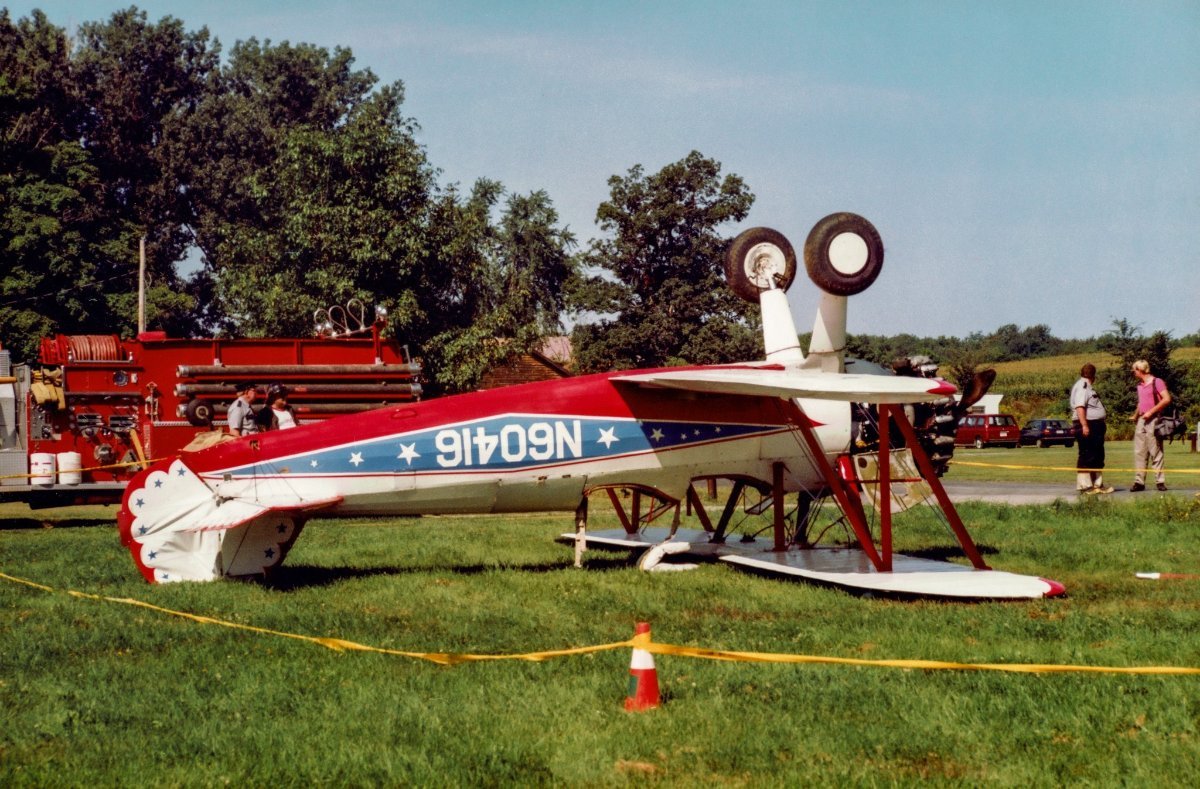
Nothing so humiliating as flipping by beloved Stearman on its back
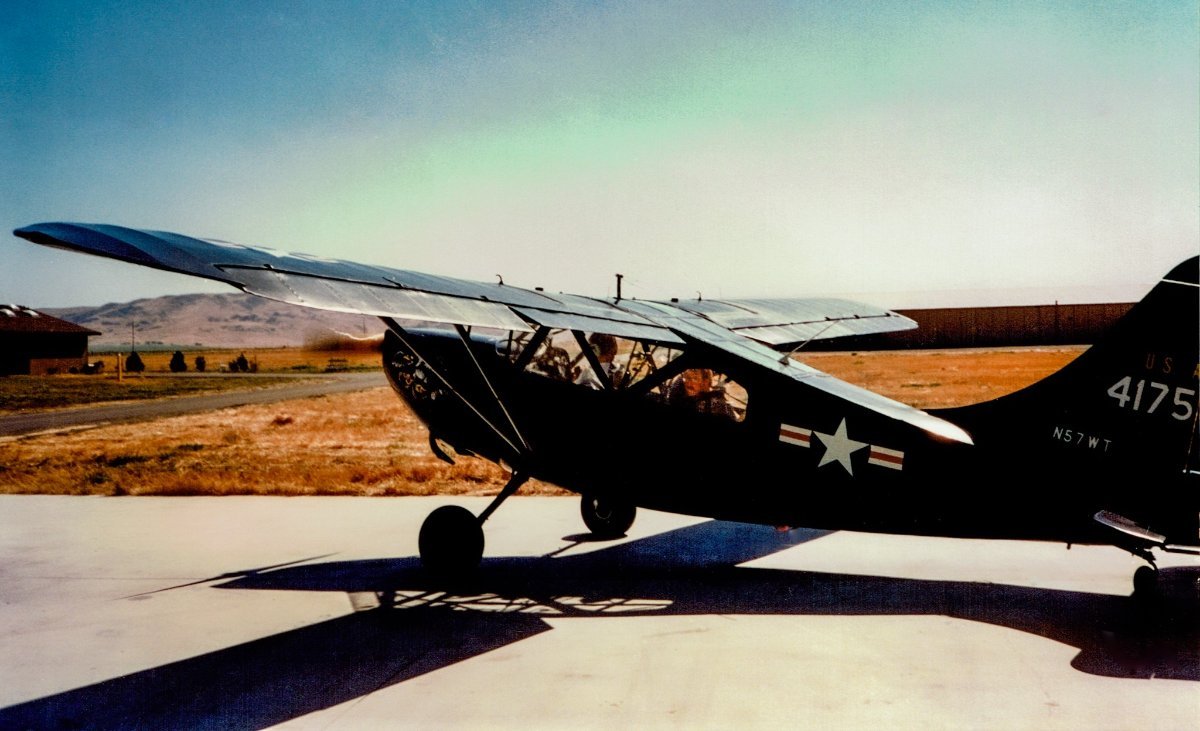
I had been promised a checkout in the old Stinson but all I got was the back seat for one circuit of the airplane
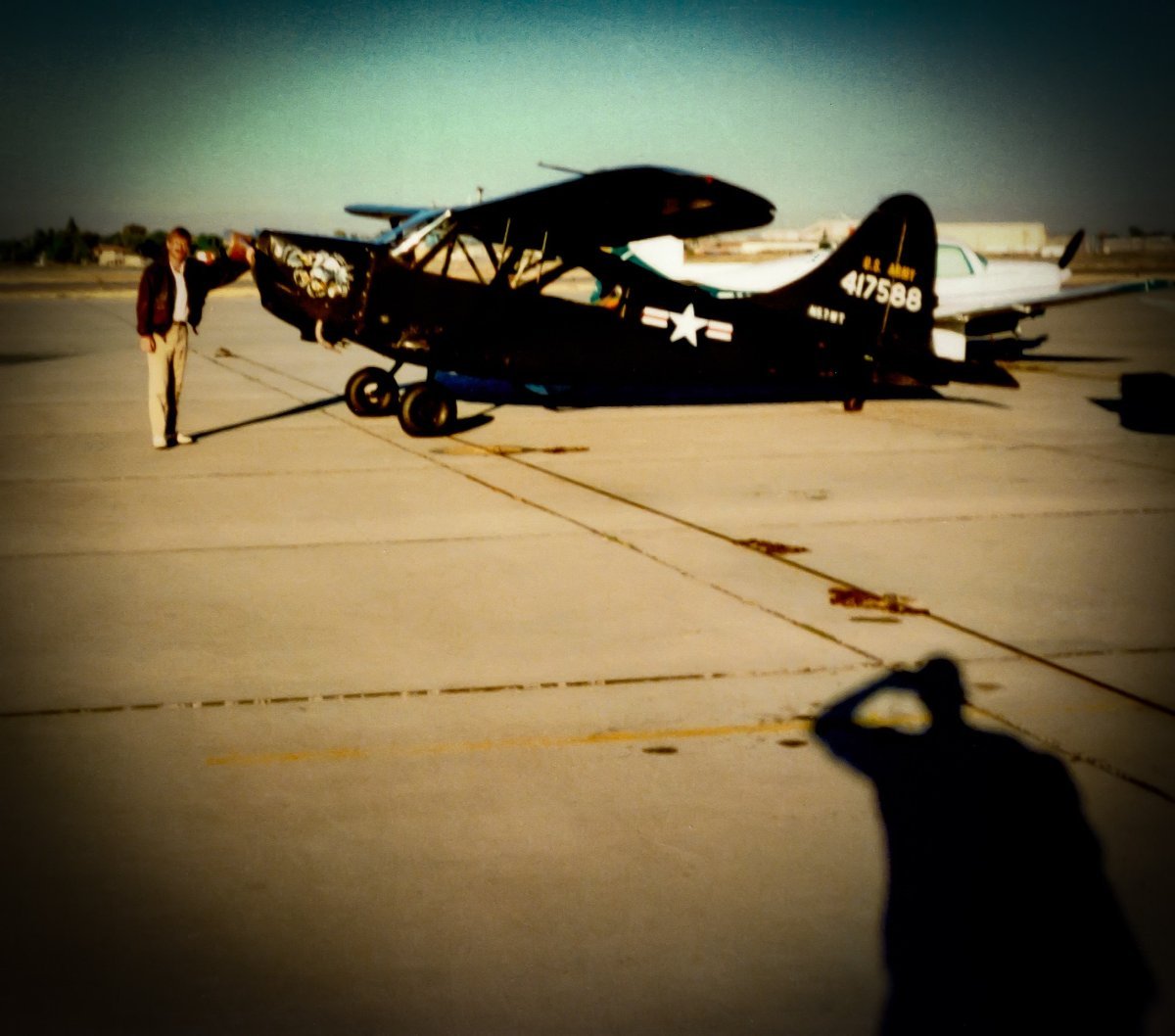
Bakersfield: first stop on the transcontinental odyssey
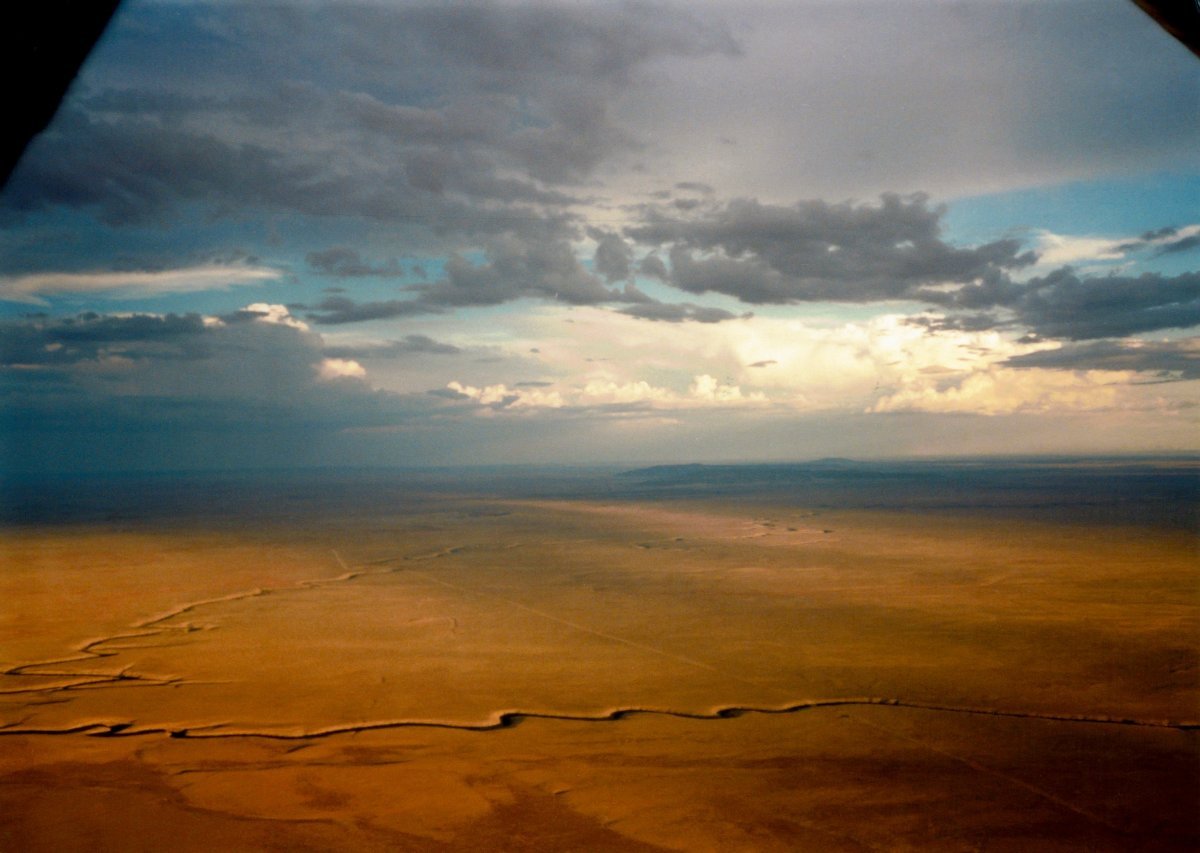
The tranquility of the Painted Desert belies its heat and paucity of features
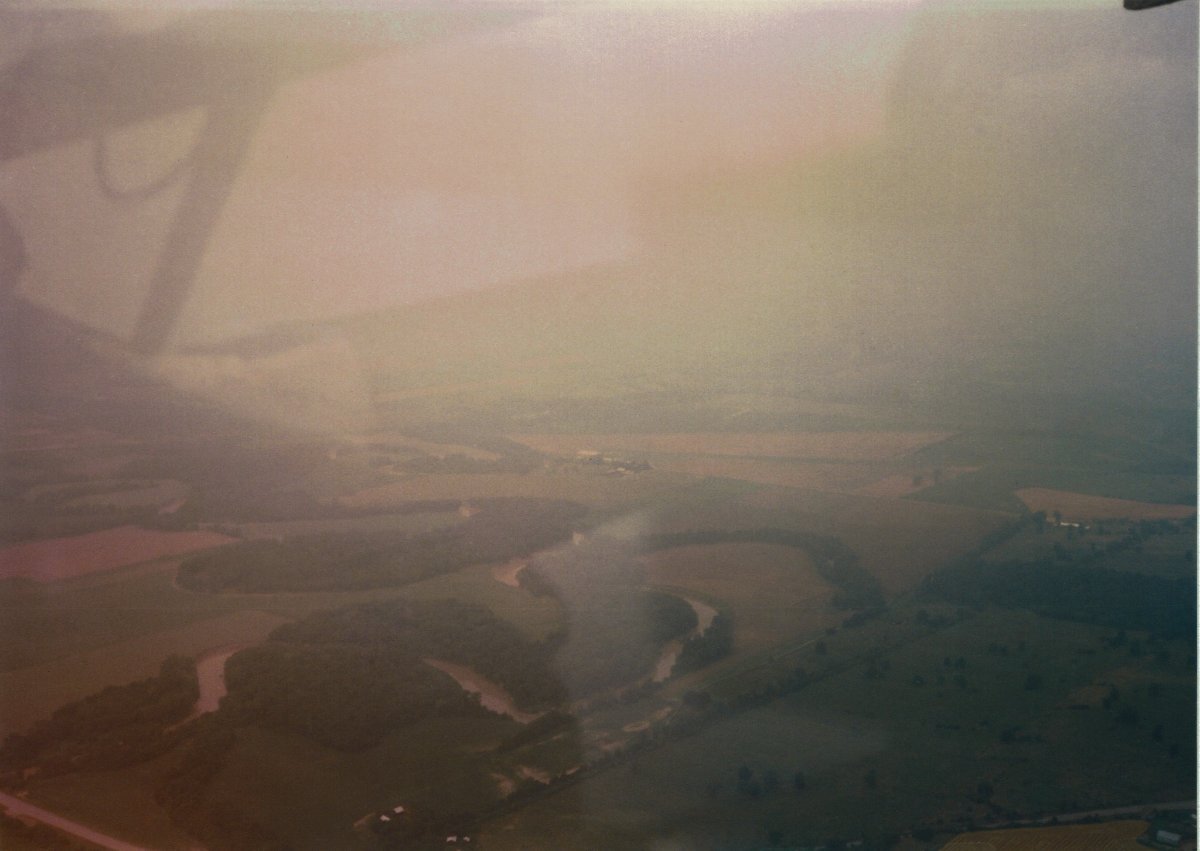
Northeast summer haze can be hazardous. It cloaks dangers such as soaring antennas, and it hinders visual navigation


.jpg.23144c72da5eac547179455603561cd3.jpg)
.thumb.jpg.55eff1ef579c86bcb29a3fbdf80f7c2d.jpg) This piece is from Chapter 6 and it introduces the inner conflict of the protagonist when presented with the primary conflict of a 3000 mile flying challenge presented by the antagonist. In the aviation business, there are two types of people: those of integrity and complete rascals. Brave souls of high honor stand next to snake oil salesmen, with no population between the two. Flying produces Pulitzer Prize winners, war heroes and drug runners. Pilots are gossips, and I had heard a lot about Harry Forrest: the stint in federal prison, the airport that burned down, the lawsuits, the mechanics who came and went like the change of the seasons. What made things worse was that Harry Forrest was an experienced and knowledgeable pilot. Knowledge and courage make a scoundrel more dangerous—and I had no doubt that Harry Forrest was a knowledgeable and courageous man. I’ve always believed that you either trust someone or you don’t; there’s no middle ground. Truth is complete or it’s nothing and, in flying, truth can be life or death. My friend Lance and I had just wrestled the Stearman into its hangar after a short flight when Harry appeared on his golf cart. “Hey.” “How you doin’, Harry?” “Well, I’ve got a problem. What are you doing in July?” “No plans, why?” “You think you can fly a Stinson L-5?” I’d never actually seen one but knew it was a small, slow observation plane from World War II. Forrest’s eyes twinkled like the stars on a frigid night, taunting, challenging my cocksureness. “Sure.” “I think so too. If you can fly this old Stearman, you can fly that.” Ego massaged, I nodded. “We’re buying one and we need it ferried here. You interested?” “Of course. Just give me enough notice.” As Forrest puttered away in his golf cart, I walked over to Lance, who was tying a rope from a wing to one of the hangar posts, sweat falling from his chin. “What was that all about?” “He wants me to ferry an airplane for him.” “Yeah, what kind?” “Stinson L-5.” “You can fly that, can’t ya?” “Sure. With some instruction. Let’s get a beer.” Two weeks later, as Forrest pulled up to the hangar, I was alone and, in theory, ready for cross-examination. “How are you, Harry?” “Good. You still interested in flying that plane?” “Yep.” “You sure?” “I’m sure.” “By the way, did I tell you where it is?” “Where is it?” “Oakland.” “Oakland!” I couldn’t stop my voice from rising. “Oakland…it’s in California.” “Yeah, Harry, I know where it is.” Forrest and I stared at each other with only the chirping of birds and the rustling of trees breaking the silence. “I’ll pay all your expenses.” The voice hinted desperation. “I’ll pay for the gas.” “Big deal, Harry. How about the funeral?” “Look, Bob, it’s a museum piece.” “Harry, I’ve been to lots of museums and I haven’t seen much flying.” Although I hardly knew a thing about the plane, I knew it wasn’t some glorified bus with soft seats, jet engines, movies and cocktails. There would also be no autopilot, no fancy navigational systems and other electronic wizardry to assist me on the way. The old, primitive plane would not fly itself. It would demand seat-of-the-pants, hands-on judgment over the entire continent. The flying options chilled me. I knew I could learn to fly the plane, but could I navigate the entire country? Would it be able to clear the mountains, or would I fly off into the nothingness of the desert never to be heard from again? But what bothered me most was that there are two types of people in aviation, and Harry Forrest was one of them.
This piece is from Chapter 6 and it introduces the inner conflict of the protagonist when presented with the primary conflict of a 3000 mile flying challenge presented by the antagonist. In the aviation business, there are two types of people: those of integrity and complete rascals. Brave souls of high honor stand next to snake oil salesmen, with no population between the two. Flying produces Pulitzer Prize winners, war heroes and drug runners. Pilots are gossips, and I had heard a lot about Harry Forrest: the stint in federal prison, the airport that burned down, the lawsuits, the mechanics who came and went like the change of the seasons. What made things worse was that Harry Forrest was an experienced and knowledgeable pilot. Knowledge and courage make a scoundrel more dangerous—and I had no doubt that Harry Forrest was a knowledgeable and courageous man. I’ve always believed that you either trust someone or you don’t; there’s no middle ground. Truth is complete or it’s nothing and, in flying, truth can be life or death. My friend Lance and I had just wrestled the Stearman into its hangar after a short flight when Harry appeared on his golf cart. “Hey.” “How you doin’, Harry?” “Well, I’ve got a problem. What are you doing in July?” “No plans, why?” “You think you can fly a Stinson L-5?” I’d never actually seen one but knew it was a small, slow observation plane from World War II. Forrest’s eyes twinkled like the stars on a frigid night, taunting, challenging my cocksureness. “Sure.” “I think so too. If you can fly this old Stearman, you can fly that.” Ego massaged, I nodded. “We’re buying one and we need it ferried here. You interested?” “Of course. Just give me enough notice.” As Forrest puttered away in his golf cart, I walked over to Lance, who was tying a rope from a wing to one of the hangar posts, sweat falling from his chin. “What was that all about?” “He wants me to ferry an airplane for him.” “Yeah, what kind?” “Stinson L-5.” “You can fly that, can’t ya?” “Sure. With some instruction. Let’s get a beer.” Two weeks later, as Forrest pulled up to the hangar, I was alone and, in theory, ready for cross-examination. “How are you, Harry?” “Good. You still interested in flying that plane?” “Yep.” “You sure?” “I’m sure.” “By the way, did I tell you where it is?” “Where is it?” “Oakland.” “Oakland!” I couldn’t stop my voice from rising. “Oakland…it’s in California.” “Yeah, Harry, I know where it is.” Forrest and I stared at each other with only the chirping of birds and the rustling of trees breaking the silence. “I’ll pay all your expenses.” The voice hinted desperation. “I’ll pay for the gas.” “Big deal, Harry. How about the funeral?” “Look, Bob, it’s a museum piece.” “Harry, I’ve been to lots of museums and I haven’t seen much flying.” Although I hardly knew a thing about the plane, I knew it wasn’t some glorified bus with soft seats, jet engines, movies and cocktails. There would also be no autopilot, no fancy navigational systems and other electronic wizardry to assist me on the way. The old, primitive plane would not fly itself. It would demand seat-of-the-pants, hands-on judgment over the entire continent. The flying options chilled me. I knew I could learn to fly the plane, but could I navigate the entire country? Would it be able to clear the mountains, or would I fly off into the nothingness of the desert never to be heard from again? But what bothered me most was that there are two types of people in aviation, and Harry Forrest was one of them.