J. Stewart Dixon
-
Posts
7 -
Joined
-
Last visited
Everything posted by J. Stewart Dixon
-
11-30-24
Finally joined Publisher's Marketplace. Thank you Write-to-Pitch for the fire under my ass to do this. I've been avoiding for two reasons: 1. Ugh. Another user name and passcode and monthly credit card charge. 2. I didn't want to know- head in sand- if it was zero-skunk-nuttin as far as comparable book deals in my genre...
Happy to report I was wrong! Easily found 12 comparable irreverent anti-self-help book deals signed in 2024- at least half with major publishers. Ya-fuckin'-hoo!
I've inserted these 12 PM deals into the last pages of my book proposal.
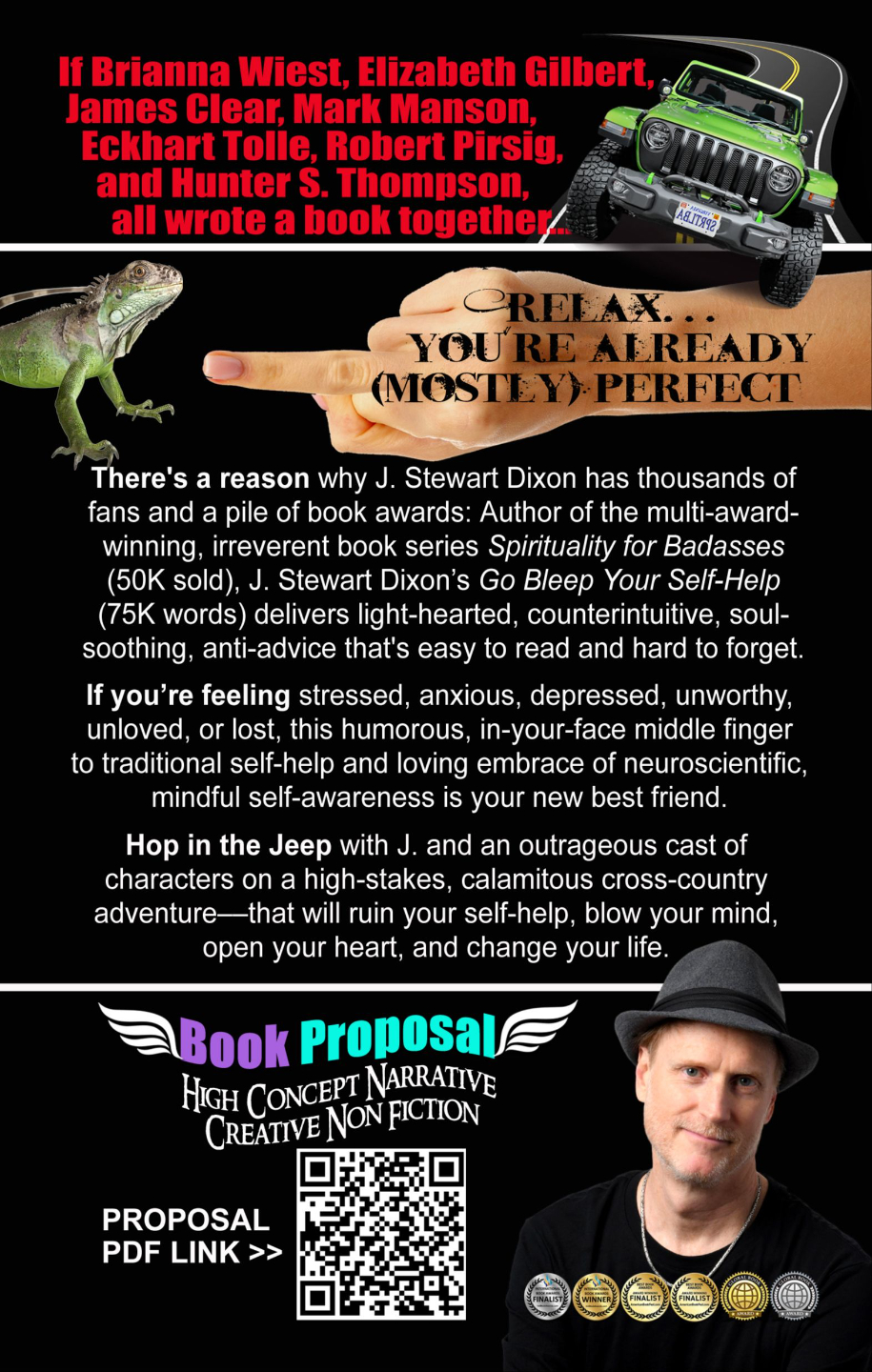
Here's the updated book proposal (safe Google Docs Link) for Go Bleep Your Self Help:
https://drive.google.com/file/d/1p0-3SS_rrfiut8VKmJdHYIt-cnl9vW_6/view?usp=sharing
Thanks
J.
-
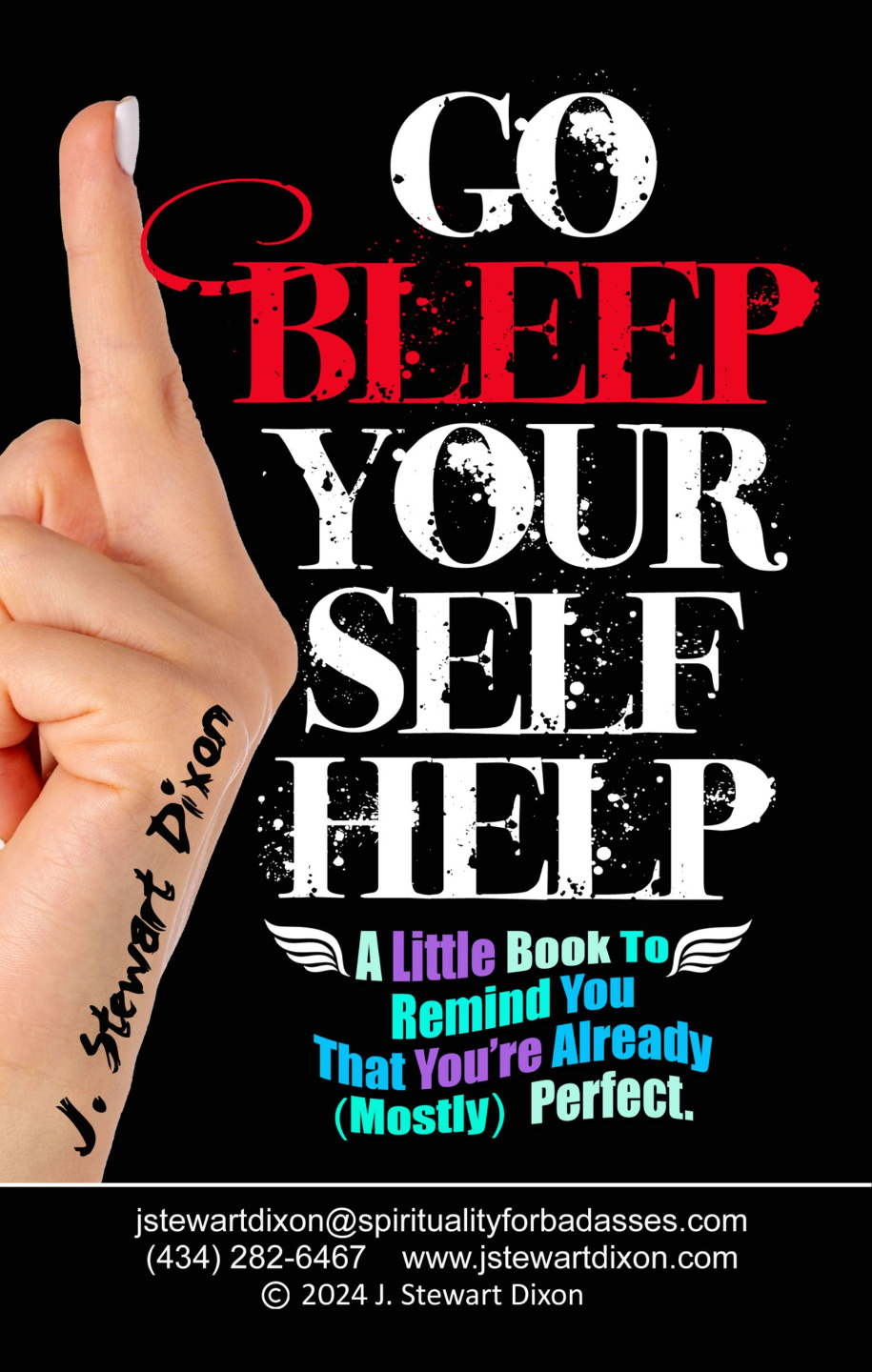
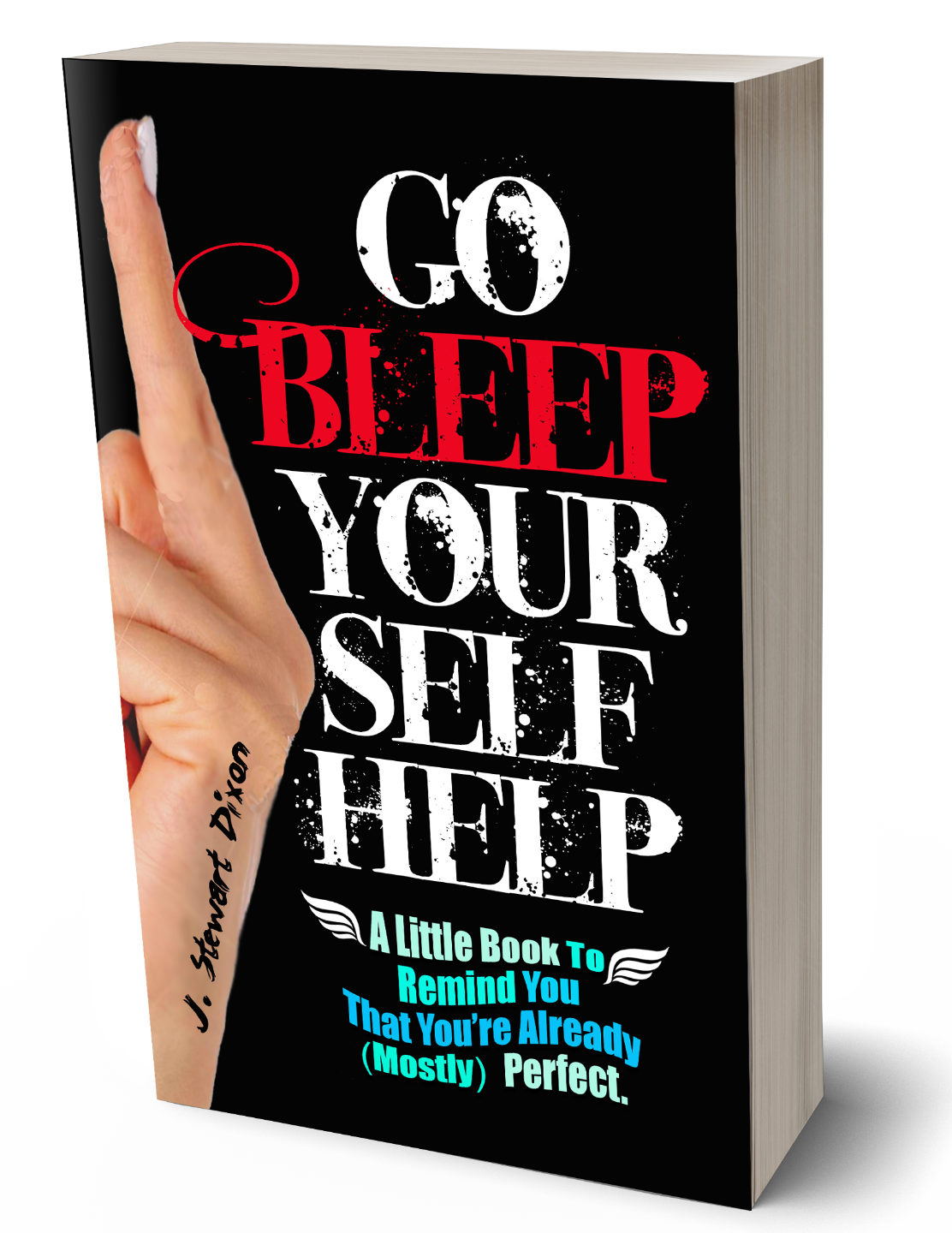
 Updated: 11-30-24 Howdy all, Here's the full proposal PDF: google docs link to the full book proposal (formatted and easier on the eyes than reading here) Go Bleep Your Self-Help has an Introduction which um, well, you know...introduces the book, but here ya go: Chapter 1: Good Morning Sunshine, In your dream, a book has caught your eye. On its cover: a life-sized middle finger unabashedly flipping off your life’s vainglorious efforts to improve, better, and help yourself. You are delighted and offended. You are hopeful and skeptical. You are intrigued and exhausted. A thought-and-feeling-infused hurricane of failure, unworthiness, meaninglessness, unlove, boredom, and confusion whips up those old, stalwart, inner nemeses of yours––stress, worry, doubt, angst, and unhappiness. You sigh heavily and take a deep breath. But before you’ve had even an iota of time to process all this––Poof!––the book magically transforms into a two-and-a-half-foot-long, chartreuse-green iguana. The iguana looks up at you, peering directly into your eyes. It lifts its reptilian middle claw, shoves it prominently in your face, and speaks clearly: “Go Fuck Your Self-Help.” Damn, man, you think. It didn’t even bleep out the cussword. Then, you wake up. Only––you haven’t woken up. You’re still here, holding the very same book in your hands and, in no small way, still dreaming the very same dream…that there is supposedly an actual self that can somehow, actually…be helped. Before I introduce myself––and yes, I know this is a little awkward––I just want to ensure that the last sentence's gravitas isn't overlooked. Read it again. It's not a frivolous, throw-away, secondary note or idea––it’s the entire damn symphony and the main thesis of this book. In reality, there is no– Shit. I'm getting ahead of myself. Again. Damnit. We just started. My bad. Okay. I'm putting the Jeep in reverse. Let's back up a bit, shall we? Take a deep breath. Sigh. Relax. Ahh. There. That’s better. Greetings. Allow me to introduce myself: I’m your mostly perfect part. I’ll be your guide and traveling companion throughout this adventure. Honestly, I have no clue how you or I got here. I can only surmise that some strange cocktail of serendipity, synchronicity, and coincidence (and yes, of course, that vainglorious middle finger on the front cover of this book also) conspired––to have us meet. I'll take it. I’m not picky about the how-or-whys of this kind of fortuitous and synchronous situation. I’m merely grateful and glad to finally meet you––once again. Who am I really? I’m you, or, if you'd like, YOU. Yes, we have indeed met before––you just don’t remember much about me. I’m the deepest, truest YOU before all the surface you. You’ve forgotten about me because, well, life happened, growing up happened, difficulty happened, challenge happened, drama happened, suffering happened. Anyway, that’s usually the case. No––I’m not God; Nuh-uh––I’m not your higher self; No friend––I’m not your furry, totem-spirit animal; No ma’am–– I’m not your wounded, lost inner child. And nope, not even, negatory––I’m not your heavenly angelic guide or besty metaphysical master. Sorry to say, I’m much more prosaic and practical than any of those guys or gals. I’m your inner self-awareness. All human beings have an inner self-aware part. Oddly enough however, this self-awareness has been mostly ignored, overlooked and undervalued. Let’s change this, shall we? Yes? Cool. Here's how: To begin with, you and I are going to spend a lot more time together, and you are going to start feeling a lot better about a lot of things. We’re going on a road trip, and we’re going to have a ton of profound, strange, wild, and wonderful adventures, all designed to help you re-discover your inner self-awareness. While on this trip, I will be your guide, best friend, and drill sergeant, all rolled into one. Okay. Gimme a sec–– I should probably pull over and park the Jeep for this next part–– There we go. Cool–– Just to make our trip more personable and less awkward, please simply call me J. and treat me like your equal because––I am absolutely your equal. And, of course, let’s bring you into the adventure, shall we? I don’t want this to be a boring, didactic, one-way lecture. I’d like some company here, and your presence will be a big part of the lesson. So, come on! Join me on stage–– Yes, you! You out there with the book in your hand! Come on. No hiding. Step right up… “Me?” Ahhh––Yes. There you are. Welcome. “I’m in the book now? Me? The reader?” Yep. Welcome. You're not just in the book; you're the star of the big picture show. “I’m the star?” Of course, you are! “And this helps me how?” It helps you understand the big picture, of course. “Big picture of what–exactly?” The big picture of self-awareness. It’s life-changing. It’s huge. It’s grand. It’s spectacu- “But everyone is self-aware. I don’t see the big deal.” You are correct. It's a strange one. Believe me though, it’s da bomb. It’s the real help you’ve been looking for. “Self-awareness? Come on!“ Absolutely. Deep, authentic self-awareness comes with a ton of side benefits. “Okay. Listening...” Self-awareness reduces stress, anxiety, depression, and unhappiness. It helps you live more in the moment. It gives you a greater sense of purpose and meaning. And for most, it addresses and heals the real reason you even picked up a book like this in the first place. “Alright. I’ll bite. What’s the real reason I picked up this book?” You're missing something. Its absence has created a giant gnawing, nagging hole in your being––which, oddly enough, you may or may not be aware of. “So, you're saying that self-awareness can cure this?” I'm not just saying it; I'm providing proof right now as we speak. You’re being self-aware as you read this. “Uh-How so?” Sure: My little trick of inviting you into this book, switching the writing style to a dialogue-driven format, and drawing your attention to your thoughts has directly engaged your self-awareness. In other words, you are now watching and witnessing your own thoughts with another part of your conscious mind that is most definitely not thought. "Okay. I think–I follow." It’s called the Socratic Method, a dialogue-driven technique that, if done correctly, reveals internal self-awareness. “Like Socrates?” Yep––like Socrates. This shit is as old as the Greek hills. “Okay–well. You–might–be–um…right? I–am-now? Watching–and witnessing? My–own–thoughts?” See. Told ya. “How the hell are you doing this?” I’m not doing it. Your brain is. Now… Take a deep breath. Go ahead! Take a deep breath. Inhale–– ––Hold up. Hold up. Hold up! I’m sorry–– This isn’t working. You’re drifting. “Um, Me?” No––the reader part of you. Yes, you with the book in your hands! You're drifting, lagging, and starting to zone out. This won’t do. Time to get the drill sergeant out: How the hell are you going to get anything out of this book if you don’t pay attention!? Okay, soldier. Adjust your seat. Uncross your legs. Sit up straight. There. Better. Now––take a deep breath. Yes! You, soldier! Take…a deep…breath. Inhale––allow your chest to expand. Now exhale––allow your chest to completely deflate. There you go. Perfect. Thank you. Excellent. Let this be a warning, corporal!: If you keep zoning out, this book will disintegrate right before your clueless eyes into a big, fat, useless, piece-of-shit, self-help––blather. Do you want that? No? I didn’t think so. So, soldier––in service of you gaining something from this book––Ten Hut! Pay Attention! If I catch you drifting off into La-La land again, you’ll see something like this: Excellent. Now, take your time. Slow down. Follow along and enjoy. There's no rush. Shall we resume? “So, back to me now?” Yes. “Okay. I’m game.” Great. Where were we? Right… It all boils down to the observer: Observe the thoughts in your head and then ask yourself, who or what is this observer? “Alright–Yes. I–suppose... I–am–observing my–own inner–thoughts? I'm–observing them–noticing them–watching them. Is this–correct?" Yes, very likely. Can’t exactly say for sure, but I do know that for most people, this kind of self-awareness takes a little time and practice––but not much. Keep at it. You'll see. It comes with a whole host of positive mental and physical health benefits. This isn’t my opinion, this is neuroscience. You following? “You had me at neuroscience.” Excellent. Now we can pivot to your invitation: “Eh, cool. To what? “ To tag along with me in my Jeep on a road-trip adventure to uncover your truest-deepest self-awareness. You in? “Me?” Well, yes, of course you!! Who else would I be speaking to? “Um, yes. I suppose. How long will this take?” About as long as it takes you to read a 343-page, 5"x 8" paperback book…and drive cross-country, a few thousand miles. “Yikes, that’s gonna take a while.” Oh, come on. You can work remotely, right? “Well, yes and no- I don’t really have a- Well, I guess I could make some arrangements.” Awesome. It's settled, then. “Um, okay–sure.” You won't regret this. I promise. You and I are going to have a glorious adventure, sunshine! “That’s a thing for you, isn’t it?” What? “Calling everyone sunshine?” Oh yes. Definitely. You might not see your bright inner sunshine, but I do. “I accept that.” Me too. Well––whaddya waitin’ for? Go pack your bags and make whatever arrangements you need to make. The great wide-open road is calling our names, and there's no time to waste. Oh, and one more thing–– I totally applaud your boldness, but you really don’t need that anymore. “Boldness?” Exactly. “Oh, you mean the font-type setting?” Yes, that. “Can I keep the cursive?” Sure. No problem. Now, text me your address. I'll pick you up in my Jeep tomorrow morning, 7 a.m. sharp. “You got it.” You place the book down and swallow nervously. What the hell is this thing? Am I dreaming this? No longer capable of differentiating between dream and reality, you continue ruminating. What have I gotten myself into? Your head spins. Oh God. All of the old familiar, ruinous feelings of anxiety, fear, and anger start bubbling up again. Your limbs grow weak, and your stomach knots up. No. No. NO! you proclaim to yourself. I will not go back. I will NOT go back! Fuck that place! You take a few deep breaths, attempting to settle yourself. I will NOT GO BACK! A small, still voice in the back of your mind has different plans for you, however… Oh, you will go back, it proclaims. You will go ALL–the bleeping–way back. You can’t tell if this voice in your head is a good thing or a bad thing. And that scares the hell out of you, most of all. If you’re grappling with or can’t quite believe that self-awareness is alchemical gold that can help you––Good. This is just respectable honesty. Self-awareness is like a hidden, locked-away goldmine you never knew you had access to, much less owned. Fist bump, my friend. You just found the mine and the keys to it. Of course, there’s a catch... Long ago, in a galaxy far, far away, I, too, grappled with the overlooked and undervalued mystery of self-awareness. I suffered from depression for the first two decades of my adult life. Damn, if self-awareness didn’t eventually end that depression and save my unhappy soul––but (the catch)–– I had to confront a ton of scary, internal shit for that to happen. My response to your justifiable skepticism and apropos discernment is this: Stick with me here and see if any of the adventures, lessons, or exercises presented in this book help you in any way. The worst that could happen is that you go back to driving yourself batshit crazy with conventional self-help. The best that could happen is that you start to recognize your inner self-awareness and finally recognize that YOU my friend, are… Welcome to Go Bleep Your Self Help. Let’s hit the road.
 -
11-20-24 Update Hello, Here's a safe google doc link to the book proposal and first fifty pages of Go Bleep Your Self-Help. I’ve been making improvements to it daily, based on the homework and reading assignments here. Thanks! – J. Title: Go Bleep Your Self-Help – A Little Book to Remind You That You’re Already (Mostly) Perfect Genre: Narrative Non-Fiction / Irreverent Self-Help / Body, Mind, Spirit #1 THE STORY STATEMENT and BOOK PITCH Multiple unaddressed childhood traumas have led the reader to a life of anxiety, depression, addiction, and unhappiness. The reader has tried and failed, over and over again, to address these issues with conventional therapy, pharmaceuticals, and popular self-help. Now, at rock bottom and willing to risk everything, the shadowy doppelganger of the reader, the You character in the book, reluctantly joins the charming and devious doppelganger of author J. Stewart Dixon on a high-stakes, calamitous, cross-country adventure, where four distinct, wise, healing, avant-garde teachers are encountered: an artsy neuroscientist, a rebellious college student, a burned-out army nurse, and a sage but dangerous tour boat captain. Each teacher challenges you with a unique set of inner and outer adventures, experiences, and exercises, all of which help you overcome your core traumatic wounds and rediscover your most authentic, happiest self again. A prequel to author J. Stewart’s Dixon’s multi-award winning, 2000 reviewed, Amazon best-selling book series Spirituality for Badasses, Go Bleep Your Self-Help delivers light-hearted, counterintuitive, soul-soothing, anti-advice that’s easy to read and hard to forget. There’s a reason why author J. Stewart Dixon has thousands of reviews, fans, and a pile of book awards. You’re about to find out for yourself… #2 THE ANTAGONIST FORCE The primary antagonistic force throughout Go Bleep Your Self-Help is fear itself, represented by a formless, ambiguous entity known by the You character (in dreams, anxiety attacks, and visions) as the “ice shadow.” The ice shadow prevents, avoids, denies, and distracts you from meeting your deepest childhood traumas. The ice shadow prevents, avoids, denies, and distracts you from releasing your story and identity as a depressed, addicted, wounded, unloved, and unworthy person. The ice shadow prevents, avoids, denies, and distracts you from realizing your deepest, aware self. In the end, you meet the ice shadow, and its true nature is revealed. The ice shadow is only defeated when you come to one very paradoxical, sobering, mindful, and self-aware realization: The ice shadow is both the very thing preventing you and the very thing inviting you– to grow, heal, and change. Traditional, dualistic, Cartesian models of dealing with the ice shadow – like talk therapy, pharmaceuticals, or self-help –never stood a chance. The ice shadow is a manifestation of our deepest, darkest fears masked over and hidden by…ego. #3 BREAKOUT TITLE Go Bleep Your Self-Help – A Little Book to Remind You That You’re Already (Mostly) Perfect #4 GENRE AND COMPARABLES Revised / Updated 11-12-24 Genre: Narrative Non-Fiction / Irreverent Self-Help / Body, Mind, Spirit Comparable Non-Fiction Books Last 5 Years: Spirituality for Badasses: How to Find Inner Peace and Happiness Without Losing Your Cool, Book 1, 2 & The Workbook 2021, 2022, 2023 / J. Stewart Dixon / PIE Publishing · Nearly 50,000 copies sold · Winner of 7 Indie Book Awards · 1760 Amazon & 290 Goodreads reviews · My self-published book series, Spirituality for Badasses, was written using the same style and format that will be used in Go Bleep Your Self-Help. How to do the Work: Recognize Your Patterns, Heal From Your Past and Create Your Self 2021 / Nicole LePera / Harper · 1 Million + copies sold · 15,446 Amazon reviews · #1 NYT Bestseller · Go Bleep Your Self-Help addresses similar topics but utilizes a combination of irreverent, humorous, narrative fiction story-telling and narrative nonfiction guidance instead. The Mountain is You: Transforming Self-Sabotage Into Self-Mastery 2020 / Brianna Wiest / Thought Catalog Books · 3 Million + copies sold · 20,036 Amazon reviews · #1 NYT Bestseller · Go Bleep Your Self-Help addresses similar topics but utilizes a combination of irreverent, humorous, narrative fiction story-telling and narrative nonfiction guidance instead. Atomic Habits: An Easy & Proven Way to Build Good Habits & Break Bad Ones 2018 / James Clear / Avery-Penguin Random House · 20 Million + copies sold · 134,301 Amazon reviews · #1 NYT Bestseller · Go Bleep Your Self-Help is the humorous, self-aware, anti-venom to books similar to this one, which promote positivity, discipline, habit creation, motivation, laws, self-control and effort. Such books are helpful to a few, but forgettable to most. Toxic Positivity: Keeping It Real in a World Obsessed with Being Happy 2024 / Whitney Goodman / Penguin Random House · 346 Amazon and 4,181 Goodreads reviews · Go Bleep Your Self-Help addresses similar topics but utilizes a combination of irreverent, humorous, narrative fiction story-telling and narrative nonfiction guidance instead. Comparable Irreverent Self-Help Books Last 10 Years: The Subtle Art of Not Giving a F*ck: A Counterintuitive Approach to Living a Good Life 2016 / Mark Manson / HarperOne · 10 Million + copies sold · 148,361 Amazon reviews · #1 NYT Bestseller · Go Bleep Your Self-Help addresses similar topics but utilizes a combination of irreverent, humorous, narrative fiction story-telling and narrative nonfiction guidance instead. The Life-Changing Magic of Not Giving a F*ck: How to Stop Spending Time You Don't Have with People You Don't Like Doing Things You Don't Want to Do 2015 / Sarah Knight / Hatchette Book Group · 3 Million + copies sold · 7,771 Amazon and 38,997 Goodreads reviews · Go Bleep Your Self-Help addresses similar topics but utilizes a combination of irreverent, humorous, narrative fiction story-telling and narrative nonfiction guidance instead. You Are a Badass: How to Stop Doubting Your Greatness and Start Living an Awesome Life 2013 / Jen Sincero / Hatchette Book Group · 5 Million + copies sold · 46,720 Amazon and 264,401 Goodreads reviews · #1 NYT Bestseller · Go Bleep Your Self-Help addresses similar topics but utilizes a combination of irreverent, humorous, narrative fiction story-telling and narrative nonfiction guidance instead. Unf*ck Yourself: Get Out of Your Head and into Your Life 2017 / Gary John Bishop / HarperOne · 2 Million + copies sold · 26,508 Amazon and 75,143 Goodreads reviews · #1 NYT Bestseller · Go Bleep Your Self-Help addresses similar topics but utilizes a combination of irreverent, humorous, narrative fiction story-telling and narrative nonfiction guidance instead. Let That Sh*t Go: Find Peace of Mind and Happiness in Your Everyday 2018 / Nina Purewal, Kate Petriw / Harper Collins · 810 Amazon and 2224 Goodreads reviews · Go Bleep Your Self-Help addresses similar topics but utilizes a combination of irreverent, humorous, narrative fiction story-telling and narrative nonfiction guidance instead. #5 THE HOOK- CORE WOUND AND THE PRIMARY CONFLICT Multiple unaddressed childhood traumas have led the reader to a life of anxiety, depression, addiction, and unhappiness. The reader has tried and failed, over and over again, to address these issues with conventional therapy, pharmaceuticals, and popular self-help. Now, the shadowy doppelganger of the reader, the You character in the book, must embark upon a dubious, risky adventure to find true healing and happiness. #6 PRIMARY AND SECONDARY CONFLICTS Primary Internal Conflict of Main You Character: The main You character has experienced four traumatic events that have dictated his/her life, mental health, and destiny: 1. Age 21: Incarceration and rehabilitation for two years in a penitentiary for heroin use, possession, and intent to distribute. 2. Age 19: Joined the US Army and then quickly kicked out for mental health issues, followed by a year of heroin abuse. 3. Age 15: Experienced and survived a school mass shooting where only brother was killed. 4. Age 7: Witnessed a violent fight between parents, which ended with hospitalization from hypothermia. Story-Plot-Narrative Scenario: Each of the above traumatic incidents serves as a triggering mechanism for the main You character throughout the narrative plot. Each of the four secondary characters (Neuroscientist, College Student, Army Nurse, Boat Captain) provides challenges, tension, lessons and resolutions as the You character does the difficult work of revealing, meeting and healing these core wounds. One example: The You character meets Dr. David Vanderhoff, a neuroscientist/artist from Panama City, Florida, who volunteers his time helping incarcerated drug addicts at a nearby jail. He invites the You character and J. Stewart to attend a class. You attend, and the painful years of your own incarceration and addiction are triggered. You reluctantly begin to view these past experiences in a new light. Secondary Internal Conflict of Main You Character: 1. Inner turmoil, doubt, and trust issues with the author-guide character J. Stewart Dixon. 2. Conflict with his language, methodology, values, approach, and style. 3. Conflict with sketchy and dangerous situations he places you in. 4. Conflict with his mission: to get you to meet your deepest fears. Story-Plot-Narrative Scenario: J. Stewart Dixon, the iconoclastic, irreverent, wise, author-guide character in Go Bleep Your Self Help, is a hard pill for the main You character to swallow. J. Stewart serves as a mentor, best friend, Zen master, and drill sergeant- all rolled into one. He is an unrepentant master of the art of tough love. The You character resists, confronts, challenges, and bemoans J. Stewart every step of the way…until the end of course, when you have the epiphany that everything this wild, Zen-clown just put you through was for your ultimate healing and benefit. One example: J. Stewart introduces you to Seo-Yeon Lee, a Korean-American ex-army nurse who lives in Calgary, Alberta, Canada. She provides arduous, two-day, emotional-psychological reset treks for burned-out medical professionals to the top of nearby Ha Ling Mountain. You reluctantly join J. on one such expedition, which turns out to be more dangerous than anticipated. The experience pisses you off and triggers a deflating and humiliating experience you had while in the army. You live through it, are challenged to reflect deeply, and ultimately, are grateful. #7 LOCATION SETTINGS Go Bleep Your Self Help has four major parts with four primary location settings. They are as follows: Part One: The Neuroscientist and the Edge of the Known Universe Panama City, Florida: · Beach home of Dr. David Vanderhoff, a neuroscientist/artist/documentary film-maker Tallassee, Florida: Dr. Vanderhoff’s work locations: · The Tallahassee Federal Detention Center · Tallahassee Memorial HealthCare Hospital, Department of Neuroscience · The Challenger Learning Center (NASA) and IMAX Theater The two central Florida locations symbolize the two-sided paradox at the heart of Go Bleep Your Self Help. On the one hand, the work locations of Dr. Vanderhoff in Tallahassee, Florida, serve as hard neuroscientific evidence for the book’s main thesis – that an immense, positive reservoir of mental health healing is available through mindfulness, meditation, self-awareness, and knowing thyself. On the other hand, Dr. Vanderhoff’s beautiful, artsy beachfront home in Panama City symbolizes the inherent beauty and mystery contained within mindfulness, meditation, self-awareness, and knowing thyself. These locations set the tone for the rest of the adventure. Part Two: The Iconoclast and The Flight of the New Shephard The University of Texas- Austin: • Home of Marseille (Mars) David a highly intelligent, lonely, slightly depressed, and strangely lucky student who refuses to pay or register for class. The Guadalupe Mountains, West Texas: • Home of Blue Origin Space Flights, Launch Site One and the Astronaut Village The two Texas locations support the same inherent paradox found in mindfulness, meditation, self-awareness, and knowing thyself. The University of Austin represents conventional learning, dry academic training, and heartless healing (talk therapy, pharmaceuticals, and traditional self-help). The Blue Origin Space Flight Center in the Guadalupe Mountains (on which Marseille has won a free flight for two) represents the synchronistic good fortune of thinking outside the box and embracing life authentically in the moment. Part Three: The Nurse and the Expedition to the Top of Ha Ling Mountain Calgary, Alberta, Canada: · Home of Seo-Yeon Lee, a Korean-American ex-army nurse. · Location of The Canadian Mindfulness Research Center Ha Ling Mountain Peak- One hour outside of Calgary · Hiking expedition destination where a snowstorm engulfs all involved and creates a setting ripe for tension, challenge, and learning. The Calgary, Canada locations serve as a caldron for the main character's internal conflicts. The Canadian Mindfulness Research Center is a softball arena where the main character is prepped for the challenge to come. The Ha Ling Mountain Peak is the heart of the challenge. Things go very wrong, and hard lessons are learned. Part Four: The Captain and the Calamity at Orcas Island Seattle, Washington: · Home of Sail Boat, Tour Captain, Issac Hjelmsgaard · Bell Harbor Marina on the Puget Sound, his workplace location Orca Island, Straight of Georgia- Four hours from Seattle · Sailboat destination where a storm capsizes the boat and all struggle to survive The Seattle, Washington, locations serve as the final heated caldron for the deepest, darkest internal conflict of the main You character. The captain’s rough and grimy workplace serves as an unconventional location where the main You character is confronted with the most brutal truths about mindful, self-aware, and know thyself healing. The Orcas Island location is a "Jonah and the Whale" final test for the You character, where the deepest core wound is met and healed.
-
11-30-24 Update
Hello,
Here's a safe google doc link to the book proposal and first fifty pages of Go Bleep Your Self-Help. I’ve been making improvements to it daily, based on the homework and reading assignments here. Thanks! – J.
-
11-11-24 read em both- great stuff
-
11-9-24
I dove deeper into Genre and Comparable books today for Go Bleep Your Self-Help and came up with this new list...
Genre:
Narrative Non-Fiction / Irreverent Self-Help / Body, Mind, Spirit
Comparable Books:
Non-Fiction Books Last 5 Years:
Spirituality for Badasses:
How to Find Inner Peace and Happiness Without Losing Your Cool, Book 1, 2 & The Workbook
2021, 2022, 2023 / J. Stewart Dixon / PIE Publishing
- Nearly 50,000 copies sold
- Winner of 7 Indie Book Awards
- 1760 Amazon & 290 Goodreads reviews
- My self-published book series, Spirituality for Badasses, was written using the same style and format that will be used in Go Bleep Your Self-Help.
How to do the Work:
Recognize Your Patterns, Heal From Your Past and Create Your Self
2021 / Nicole LePera / Harper
- 1 Million + copies sold
- 15,446 Amazon reviews
- #1 NYT Bestseller
- Go Bleep Your Self-Help addresses similar topics but utilizes a combination of irreverent, humorous, narrative fiction story-telling and narrative nonfiction guidance instead.
The Mountain is You:
Transforming Self-Sabotage Into Self-Mastery
2020 / Brianna Wiest / Thought Catalog Books
- 3 Million + copies sold
- 20,036 Amazon reviews
- #1 NYT Bestseller
- Go Bleep Your Self-Help addresses similar topics but utilizes a combination of irreverent, humorous, narrative fiction story-telling and narrative nonfiction guidance instead.
Atomic Habits:
An Easy & Proven Way to Build Good Habits & Break Bad Ones
2018 / James Clear / Avery-Penguin Random House
- 20 Million + copies sold
- 134,301 Amazon reviews
- #1 NYT Bestseller
- Go Bleep Your Self-Help is the humorous, self-aware, anti-venom to books similar to this one, which promote positivity, discipline, habit creation, motivation, laws, self-control and effort. Such books are helpful to a few, but useless and forgettable to most.
Toxic Positivity:
Keeping It Real in a World Obsessed with Being Happy
2024 / Whitney Goodman / Penguin Random House
- 346 Amazon and 4,181 Goodreads reviews
- Go Bleep Your Self-Help addresses similar topics but utilizes a combination of irreverent, humorous, narrative fiction story-telling and narrative nonfiction guidance instead.
Irreverent Self-Help Books
Last 10 Years:
The Subtle Art of Not Giving a F*ck:
A Counterintuitive Approach to Living a Good Life
2016 / Mark Manson / HarperOne
- 10 Million + copies sold
- 148,361 Amazon reviews
- #1 NYT Bestseller
- Go Bleep Your Self-Help addresses similar topics but utilizes a combination of irreverent, humorous, narrative fiction story-telling and narrative nonfiction guidance instead.
The Life-Changing Magic of Not Giving a F*ck:
How to Stop Spending Time You Don't Have with People You Don't Like Doing Things You Don't Want to Do
2015 / Sarah Knight / Hatchette Book Group
- 3 Million + copies sold
- 7,771 Amazon and 38,997 Goodreads reviews
- Go Bleep Your Self-Help addresses similar topics but utilizes a combination of irreverent, humorous, narrative fiction story-telling and narrative nonfiction guidance instead.
You Are A Badass:
How to Stop Doubting Your Greatness and Start Living an Awesome Life
2013 / Jen Sincero / Hatchette Book Group
- 5 Million + copies sold
- 46,720 Amazon and 264,401 Goodreads reviews
- #1 NYT Bestseller
- Go Bleep Your Self-Help addresses similar topics but utilizes a combination of irreverent, humorous, narrative fiction story-telling and narrative nonfiction guidance instead.
Unf*ck Yourself:
Get Out of Your Head and into Your Life
2017 / Gary John Bishop / HarperOne
- 2 Million + copies sold
- 26,508 Amazon and 75,143 Goodreads reviews
- #1 NYT Bestseller
- Go Bleep Your Self-Help addresses similar topics but utilizes a combination of irreverent, humorous, narrative fiction story-telling and narrative nonfiction guidance instead.
Let That Sh*t Go:
Find Peace of Mind and Happiness in Your Everyday
2018 / Nina Purewal, Kate Petriw / Harper Collins
- 810 Amazon and 2224 Goodreads reviews
- Go Bleep Your Self-Help addresses similar topics but utilizes a combination of irreverent, humorous, narrative fiction story-telling and narrative nonfiction guidance instead.
Mind-Body-Spirit Classics
Last 50 Years:
Zen and the Art of Motorcycle Maintenance:
An Inquiry into Values
1974 / Robert M. Pirsig / William Morrow-Bantam
- A classic in the Mind / Body / Spirit genre, Zen and the Art is the closest, heart and soul comparable to Go Bleep Your Self-Help.
- Both use the Socratic method, gestalt, insight, and mindfulness to draw philosophical conclusions about life.
- Both take the reader on a healing, cross-country road trip. Robert, of course, drove a 1966 Honda Super Hawk motorcycle. I drive a 2019 green, 4-door Jeep Wrangler.
Way of the Peaceful Warrior:
A Book That Changes Lives
1980 / Dan Millman / New World Library
- Another classic in the Mind / Body / Spirit genre Way of the Peaceful Warrior shares a similar fictional storyline, main character inner journey arc, and crazy-wisdom-Zen-teaching as Go Bleep Your Self-Help.
Be Here Now:
1971 / Ram Dass- Richard Alpert / Hanuman Foundation
- Be Here Now is on this list because the text fonts, chapter headings and imagery formatting used in it inspired similar formatting for Go Bleep Your Self-Help.
-
Genre: Narrative Non-Fiction / Irreverent Self-Help
Title: Go Bleep Your Self-Help – A Little Book to Remind You That You’re Already (Mostly) Perfect
#1 THE STORY STATEMENT
Multiple unaddressed childhood traumas have led the reader to a life of anxiety, depression, addiction, and unhappiness. The reader has tried and failed, over and over again, to address these issues with conventional therapy, pharmaceuticals, and popular self-help. Now, the shadowy doppelganger of the reader, the You character in the book, joins a charming and devious author –J. Stewart Dixon– on a cross-country adventure where You encounter four distinct, wise, healing, and avant-garde teachers: an artsy neuroscientist, a rebellious college student, a burned-out army nurse, and a sage but dangerous tour boat captain. Each teacher challenges you with unique inner and outer adventures, experiences, techniques, and exercises, all of which help you to overcome your core traumatic wounds and rediscover your most authentic, happiest self again.
#2 THE ANTAGONIST FORCE
The primary antagonistic force throughout Go Bleep Your Self-Help is fear itself, represented by a formless, ambiguous entity known by the You character (in dreams, anxiety attacks, and visions) as the “ice shadow.” The ice shadow prevents, avoids, denies, and distracts you from meeting your deepest childhood traumas. The ice shadow prevents, avoids, denies, and distracts you from releasing your story and identity as a depressed, addicted, wounded, unloved, and unworthy person. The ice shadow prevents, avoids, denies, and distracts you from realizing your deepest, aware self. In the end, you meet the ice shadow, and its true nature is revealed. The ice shadow is only defeated when you come to one very paradoxical, sobering, mindful, and self-aware realization: The ice shadow is both the very thing preventing you and the very thing inviting you– to grow, heal, and change. Traditional, dualistic, Cartesian models of dealing with the ice shadow – like talk therapy, pharmaceuticals, or self-help –never stood a chance. The ice shadow is a manifestation of our deepest, darkest fears masked over and hidden by…ego.
#3 BREAKOUT TITLE
Go Bleep Your Self-Help – A Little Book to Remind You That You’re Already (Mostly) Perfect
#4 GENRE AND COMPARABLES
Genre: Narrative Non-Fiction / Irreverent Self-Help / Body, Mind, Spirit
Comparable Books:
1. Spirituality for Badasses, Book 1 and 2 ––2021, 2023, J. Stewart Dixon
My self-published book series, Spirituality for Badasses has won seven indie publishing awards and sold almost 50,000 copies. It was written using the same style and format that will be used in Go Bleep Your Self Help.
2. The Subtle Art of Not Giving A Fuck ––2016, Mark Manson
HarperOne, a division of HarperCollins Publishers, published The Subtle Art in 2016. It is humorous, healing, insightful, and unreserved in its irreverent approach. It has also sold over 10 million copies.
3. Zen and the Art of Motorcycle Maintenance ––1974, Robert M. Pirsig
A classic in the Mind / Body / Spirit genre, Zen and the Art is the closest, heart and soul comparable to Go Bleep Your Self-Help. Both use the Socratic method, gestalt, insight, and mindfulness to draw philosophical conclusions about life, and both take the reader on a healing, cross-country road trip. Robert, of course, drove a 1966 Honda Super Hawk motorcycle. I drive a 2019 green, 4-door Jeep Wrangler.
#5 THE HOOK- CORE WOUND AND THE PRIMARY CONFLICT
Multiple unaddressed childhood traumas have led the reader to a life of anxiety, depression, addiction, and unhappiness. The reader has tried and failed, over and over again, to address these issues with conventional therapy, pharmaceuticals, and popular self-help. Now, the shadowy doppelganger of the reader, the You character in the book, must embark upon a dubious, risky adventure to find true healing and happiness.
#6 PRIMARY AND SECONDARY CONFLICTS
Primary Internal Conflict of Main You Character:
The main You character has experienced four traumatic events that have dictated his/her life, mental health, and destiny:
1. Age 21: Incarceration and rehabilitation for two years in a penitentiary for heroin use, possession, and intent to distribute.
2. Age 19: Joined the US Army and then quickly kicked out for mental health issues, followed by a year of heroin abuse.
3. Age 15: Experienced and survived a school mass shooting where only brother was killed.
4. Age 7: Witnessed a violent fight between parents, which ended with hospitalization from hypothermia.
Story-Plot-Narrative Scenario:
Each of the above traumatic incidents serves as a triggering mechanism for the main You character throughout the narrative plot. Each of the four secondary characters (Neuroscientist, College Student, Army Nurse, Boat Captain) provides challenges, tension, lessons and resolutions as the You character does the difficult work of revealing, meeting and healing these core wounds.
One example:
The You character meets Dr. David Vanderhoff, a neuroscientist/artist from Panama City, Florida, who volunteers his time helping incarcerated drug addicts at a nearby jail. He invites the You character and J. Stewart to attend a class. You attend, and the painful years of your own incarceration and addiction are triggered. You reluctantly begin to view these past experiences in a new light.
Secondary Internal Conflict of Main You Character:
1. Inner turmoil, doubt, and trust issues with the author-guide character J. Stewart Dixon.
2. Conflict with his language, methodology, values, approach, and style.
3. Conflict with sketchy and dangerous situations he places you in.
4. Conflict with his mission: to get you to meet your deepest fears.
Story-Plot-Narrative Scenario:
J. Stewart Dixon, the iconoclastic, irreverent, wise, author-guide character in Go Bleep Your Self Help, is a hard pill for the main You character to swallow. J. Stewart serves as a mentor, best friend, Zen master, and drill sergeant- all rolled into one. He is an unrepentant master of the art of tough love. The You character resists, confronts, challenges, and bemoans J. Stewart every step of the way…until the end of course, when you have the epiphany that everything this wild, Zen-clown just put you through was for your ultimate healing and benefit.
One example:
J. Stewart introduces you to Seo-Yeon Lee, a Korean-American ex-army nurse who lives in Calgary, Alberta, Canada. She provides arduous, two-day, emotional-psychological reset treks for burned-out medical professionals to the top of nearby Ha Ling Mountain. You reluctantly join J. on one such expedition, which turns out to be more dangerous than anticipated. The experience pisses you off and triggers a deflating and humiliating experience you had while in the army. You live through it, are challenged to reflect deeply, and ultimately, are grateful.
#7 LOCATION SETTINGS
Go Bleep Your Self Help has four major parts with four primary location settings. They are as follows:
Part One: The Neuroscientist and the Edge of the Known Universe
Panama City, Florida:
· Beach home of Dr. David Vanderhoff, a neuroscientist/artist/documentary film-maker
Tallassee, Florida:
Dr. Vanderhoff’s work locations:
· The Tallahassee Federal Detention Center
· Tallahassee Memorial HealthCare Hospital, Department of Neuroscience
· The Challenger Learning Center (NASA) and IMAX Theater
The two central Florida locations symbolize the two-sided paradox at the heart of Go Bleep Your Self Help. On the one hand, the work locations of Dr. Vanderhoff in Tallahassee, Florida, serve as hard neuroscientific evidence for the book’s main thesis – that an immense, positive reservoir of mental health healing is available through mindfulness, meditation, self-awareness, and knowing thyself. On the other hand, Dr. Vanderhoff’s beautiful, artsy beachfront home in Panama City symbolizes the inherent beauty and mystery contained within mindfulness, meditation, self-awareness, and knowing thyself. These locations set the tone for the rest of the adventure.
Part Two: The Iconoclast and The Flight of the New Shephard
The University of Texas- Austin:
• Home of Marseille (Mars) David, a highly intelligent, lonely, slightly depressed, and strangely lucky student who refuses to pay or register for class.
The Guadalupe Mountains, West Texas:
• Home of Blue Origin Space Flights, Launch Site One and the Astronaut Village
The two Texas locations support the same inherent paradox found in mindfulness, meditation, self-awareness, and knowing thyself. The University of Austin represents conventional learning, dry academic training, and heartless healing (talk therapy, pharmaceuticals, and traditional self-help). The Blue Origin Space Flight Center in the Guadalupe Mountains (which Marseille has won a free flight for two) represents the synchronistic good fortune of thinking outside the box and embracing life authentically in the moment.
Part Three: The Nurse and the Expedition to the Top of Ha Ling Mountain
Calgary, Alberta, Canada:
· Home of Seo-Yeon Lee, a Korean-American ex-army nurse.
· Location of The Canadian Mindfulness Research Center
Ha Ling Mountain Peak- One hour outside of Calgary
· Hiking expedition destination where a snowstorm engulfs all involved and creates a setting ripe for tension, challenge, and learning.
The Calgary, Canada locations serve as a caldron for the main character's internal conflicts. The Canadian Mindfulness Research Center is a softball arena where the main character is prepped for the challenge to come. The Ha Ling Mountain Peak is the heart of the challenge. Things go very wrong, and hard lessons are learned.
Part Four: The Captain and the Calamity at Orcas Island
Seattle, Washington:
· Home of Sail Boat, Tour Captain, Issac Hjelmsgaard
· Bell Harbor Marina on the Puget Sound, his workplace location
Orca Island, Straight of Georgia- Four hours from Seattle
· Sailboat destination where a storm capsizes the boat and all struggle to survive
The Seattle, Washington, locations serve as the final heated caldron for the deepest, darkest internal conflict of the main You character. The captain’s rough and grimy workplace serves as an unconventional location where the main You character is confronted with the most brutal truths about mindful, self-aware, and know thyself healing. The Orcas Island location is a "Jonah and the Whale" final test for the You character, where the deepest core wound is met and healed.