Hello. Here are my seven completed assignments in advance of the conference in December. I reordered them a bit for purposes of presentation. Thank you.
Assignment 3: The Breakout Title
“The Aztlan Codex, Part One: The Obsidian Empire”
This title is meant to convey a sense of the setting and cause intrigue while keeping the major plot points a mystery. It is also stated up front that it is the first in a series of books (outlined currently as six books in total) at signal to the reader they are beginning an epic journey.
Assignment 4: Genre and Comparable Works
The genre that describes this work is an epic fantasy. The books are rather long and form a multi-part story while and set in an exotic locations with magic (called Sorcery in-world). Also, as in most epic fantasy, the story features the points of view of many characters in disparate locations.
First Comparable Work: The Daevabad Trilogy (author S. A. Chakraborty)
The Daevabad Trilogy uses the unique myths, creatures, history and cultures of the Near East to create an engaging setting and a unique blend of magical and political turmoil. The Aztlan Codex does something similar using New World myth, legend, geography and cultural touchstones from North, South, and Central America. Also tonally the books are similar in that they are neither “grim and gritty” fantasy like Game of Thrones but not the classical “high” fantasy of the Lord of the Rings or the Chronicles of Narnia. The characters have physical needs: they sweat and lust, but it is not graphically portrayed.
Second Comparable Work: The Temeraire Series (author Naomi Novak)
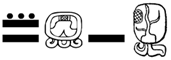
The Temeraire Series are wonderful fantasy books that blend real history with fictional elements, specifically a world where the Napoleonic Wars have intermixed the presence of dragons that have been harnessed as military assets and formed into aerial corps, as well as other magical implications. Likewise, the Aztlan Codex uses actual historical practices and cultures of the New World and overlays magic and other legends into their lived experience. What if the world had been doomed to end in 2012 (the end of the 13th Bak’tun of the Calendar Round) and human beings not only knew this, but were actively seeking to either prevent or bring this end about? What if the gods of the Popol Vuh and the Dresden Codex were not only real, but could interact with the societies that worshipped them? What would it mean if Sorcery were tied to blood, spirits, and the Calendar Round? And more intriguing, what if the great cultures of the Americas (Maya, Aztec, Teotihuacan, Inca, Olmec, Mapuche, Muisca and Pueblo) traded and formed stable governments interactive with each other?
Assignment 7: The Importance of Setting
Aztlan refers to the land the Mexica (aka Aztecs) believed they had journeyed from before arriving in the Valley of Mexico. This is the origin of Aztlan as it appears in my story. Aztlan is that mythic world of gods, monsters and magic. In Aztlan great tribes based on the actual cultures of the New World have risen up and formed powerful alliances and governments.
To create an immersive and living world, I have drawn on their real-life technology, cuisine, economics and other cultural considerations but also deviated now and then for purposes of storytelling. So for instance, the common liquors of the world such as chicha and balche are based on real liquors from the New World drunk by the Inca and Mexica (made from corn and honey) but tepache, a pineapple-based liquor, comes from trade with the Sunset Isles, a corollary with our world’s Polynesia though there is no evidence of trans-pacific trade. This is a small example of the kind of blending of fact and fiction to create a small detail of life, and has been done to the nth degree with everything including religion, trade, food, metallurgy, warfare, politics, etc.
Also, the architecture and buildings of the various tribes is often reflected our world as well. As an example, the Thunderbird, one of the northernmost of the Great Tribes, build and live in massive cliff cities such as Mesa Verde in Colorado or Montezuma’s Castle in Arizona (albeit on a much larger scale). The Condor meanwhile live on terraces based on sites such as Machu Picchu. The Tree Frog build large cities in the treetops of the Flooded Forest, a region based on the flooding of the Amazon River Basin (albeit the idea of a large tree-top city is pure fantasy). Coatepec, the imperial capital city, is a large floating city on a lake that recalls Tenochtitlan. People familiar with the subject will see many more parallels in the descriptions and maps of the important areas of Aztlan.
Using the New World and its peoples as the base for an epic fantasy was a deliberate choice, first because of my fascination with the region, and second because I feel we have enough stories based on European cultures and history. Thus magic, for example, is based on the turning of the Calendar Round (an important part of many Mesoamerican cultures), blood sacrifice, and shamanistic/animalist practices. There are no magic wands or broomsticks. I believe this setting will make The Aztlan Codex stand out as something different and (hopefully) well-regarded.
Assignment 1: Story Statement
This story is primarily based on the perspectives of three main protagonists whose paths are drawn closer together:
The first, Ahuatzi, is a young man whose sister has been kidnapped. Coming from a home of strict pacifists he nevertheless sets out hoping to find her and, if possible, bring her back. He wants to hold to his family's ideals, but can he do so and still accomplish his goal? What must he sacrifice to save her, assuming she can in fact be saved?
The second main protagonist is Caxcal. Born into a world of wealth and privilege, he has spent his adult life trying to distance himself from the politics and plots of the empire’s elites. But when his father recalls him to the court, Caxcal finds himself enmeshed in their intrigues and political maneuvers despite all he can do. His only way out might be to not only learn to play but to beat his rivals at their own games.
The third major character is Tozi, a brilliant but troubled scholar, who sees in the stars above the signs of impending doom for the empire. But while she struggles to be heard and raise the voice of warning, someone dear to her is threatened by a sinister conspiracy intent on upending the empire from top to bottom. Tozi must now prove the threat she warns of is real, or the ones she loves will pay the price.
Assignment 2: The Antagonist(s)
The Antagonist of the story is a secret cabal known as the Brotherhood of the New Moon. The members of this conspiracy range from some of the greatest in the empire to the humblest. The motives of this company are mixed: some believe they can save the empire through unsavory means, others are merely seeking power and profit for themselves, and others seek to bring about the very calamity the others wish to prevent. For the first half of the book, each protagonist is not even aware of the brotherhood’s existence. The secrecy of the organization means that members can and often are revealed in ways designed to heighten the story’s tension.
One overarching feature of the Brotherhood worth noting is they are complicit in bringing back the forbidden practice of Blood Sorcery, long since banned in the empire. They wish to harness this power for their own ends. It is for this purpose that innocents such as Ahuatzi’s sister are being taken from their homes, and it is through the actions of members of this cabal that Tozi and Caxcal end up having to work together to save someone dear to them both.
As the stories progress the leaders of the Brotherhood of the New Moon will take on more POV chapters. The current head of the order, not met in this book, is Iklo, a sociopath who believes that rise of the gods of Outer Night (Xibalba) is inevitable. In light of this he works to bring about the end of the world not with the hopes of saving humanity (who are not in his opinion worth saving) but with the idea that his service will lead to his joining them as a god himself. The Lords of Xibalba have promised him this, and even though he is skeptical of their promises, he considers resistance futile and the only logical course to do as they wish and hope they make good on their promise. He kills or saves, does good or bad, solely based on whether the act furthers this ultimate goal. Almost no one in brotherhood knows his true purpose.
The brotherhood is the active threat in the first books, but soon the Lords of Outer Night (thanks to the brotherhood’s actions) begin to take a more active role in the world. It is up to our heroes and others they meet along the way to find the ways and means to fight back and save their world, or watch it be destroyed.
Assignment 5: Core Wounds and Hook Lines
As there are three major characters in this matter, I will write three different hook lines that draw the readers along the major story arcs:
First Hook: Ahuatzi has always struggled to live up to the high ideals of his tribe and family. But when his sister is kidnapped, his choice is to abandon her to her fate or walk a path that might make him forever an outcast among his own people.
Second Hook: Caxcal wants to be a better man than his father, a powerful politician who uses any means necessary to obtain his ends. At the same time, he is desperate to win his father’s approval. Can Caxcal do this and stay true to his own beliefs?
Third Hook: Abandoned after a childhood tragedy, Tozi struggles to find love and prove her own worth. But just when her goals are within her grasp, everything she has worked for is threatened. Can she find the way to stop it, or will everything and everything she loves be torn away from her once again?
Assignment 6: Two more levels of conflict
To demonstrate this, I will provide two extracts from the book showing the internal conflict of one major character. The first is from Caxcal, who has been brought to Coatepec (the capital of the empire) by his father and ordered to make friends with other young nobles. The conversation occurs during dinner after a discussion of a war between the tribes of the north (Serpent, Jaguar and Quetzal) and the south (Condor and Tree Frog):
“All that said,” Four Yunan said thoughtfully, “are we truly so much better? By Nakón, but we send many of our own down that path daily, and for what? As you say, the Pachamama and Amazonas are miserable places, littler better than Xibalba!”
Caxcal shrugged. Here he would need to mind his tongue. “The Sapa makes himself equal to the Emperor,” he said, thinking on his father’s words. “The Condor and Tree Frog follow him, and him alone. If he would but submit…”
“He will not,” Four Yunan said. “And he does not come to fight us, so we must go to him. And every day, more Jaguar blood is spilled.”
“The entire empire bleeds,” Caxcal said diplomatically. “But by Nakón, the Jaguar are always the first and the fiercest.” Caxcal knew his flattery was obvious, and the soft words left an unhappy taste in his mouth. But to his surprise, Caxcal was developing a feel for these conversations, and right now he could tell they were nearing something important if he could just get his guest to say it.
I spend seasons defying father but once back in his clutches I do everything he wishes. Why? Why do I not tell him to go the Outer Night and have done with all this?
He put down the xocolatl and poured himself another cup of chicha. Four Yunan, meanwhile, took another long drink of his xocolatl. He looked into the cup for a minute, drumming his fingers on the table.
“We shall obey the Emperor, of course,” Four Yunan said at last. “That is our tribe’s duty, and we will always do our duty. Who knows? The Emperor, may the gods favor and preserve him, is not long for this world. Perhaps it shall please him to make peace in his last days. If so…”
The big Jaguar shrugged. His tone sounded as if he were merely thinking aloud, but Caxcal knew better. Even the fierce Jaguar Tribe favored ending the war, so much so they were willing to let the Serpent know it. Otherwise, Four Yunan would never have said that aloud, at least, not in Caxcal’s presence. However, the musings of one Jaguar youth, spoken after a heavy meal and many cups of balche and chicha, did not commit the Jaguar Tribe in any way.
Which was the whole point.
Caxcal shrugged as well as he drained his cup. “As for that, who can say? But it is getting late. What do you say to another cup of xocolatl, and then back to the city?”
“I should like it very much,” Four Yunan said. “We must do this again some time. Next time, we shall watch these divers you mention!”
Caxcal smiled and summoned their waiter. They spoke and sipped their drinks, chatting again of nothing but trivialities.
You handled yourself well, he thought, even as he continued the pleasant chatter. Sensible and diplomatic. And you learned something of value. Father will be pleased with you. Is that not what you want? Is that not why you do this?
By all the gods, Caxcal wished he could have answered no.
The second occurs when Ahuatzi, a member of the Butterfly Tribe, arrives home to find his brother is dead and his sister is taken. His father holds his dead son, and is horrified to here that his youngest son may defy their tribe’s fundamental beliefs.
Ahuatzi struggled back to his feet. He needed to find papa. Xichán. Lala. Xochi. He had to get to them. He spun in place, temporarily lost in the village where he had lived his entire life. Finally, he came to his senses, enough that his legs began to move toward his home. The thatch of the roof burned in patches, but it stood. He pushed himself onward. From inside the hut, he heard sobbing. He ran across the threshold, and his eyes adjusted to the dim light within.
His father, the solid, strong Nopaltzin, cried like a baby. He held Xichán in his arms. Blood was drying on Xichán’s chest and side, and his eyes were as empty as the boy Ahuatzi had found.
“Xichán!” Ahuatzi cried. He dropped to the ground next to his big brother.
Nopaltzin looked up at Ahuatzi, just now noticing him. “Son!” he pulled Ahuatzi to him with one massive arm, the other still holding Xichán. “Praise Kukulkán you are safe!” Nopaltzin turned his face to look upward and said, “Thank you, Lord. You do not abandon your people.”
“Papa, what happened?”
“Robbers came to the village,” Nopaltzin said, smoothing back Xichán’s hair. “So many of them. When they took the food and a few tools we just watched and waited. But then…” Nopaltzin’s shoulders shook again. “They took our people. Lala. Xochi. Xochi!” Nopaltzin broke down completely.
Oh Kukulkán, not that! Not her! Ahuatzi’s heart swelled up inside and he began tremble all over. His brother was dead, his sister in the hands of robbers. Ahuatzi should have been here, and…
And what? What could you have done if you had been here?
Probably nothing. Yet he still felt guilty.
“The women ran carrying the smaller children. Some of the older boys fought back, even though we told them not to,” Nopaltzin said. “The robbers hurt them. Killed them. Then they began to burn, just for fun, I think.”
Nopaltzin looked at Xichán’s lifeless body. “Xichán held on to Lala. He did not fight them, but he did not let go. He said he would rather die than let her go. So, they killed him. He did not even try to stop them.” Nopaltzin started crying again, rocking Xichán in his arms. “You were so brave, my boy. So brave.”
“Papa.”
Nopaltzin did not look up.
“Papa!”
“Sorry, son,” Nopaltzin said. He wiped his eyes and looked up at Ahuatzi again.
“Where did they take Xochi and Lala?” Ahuatzi asked.
Nopaltzin just shook his head.
“We must go after them!” Ahautzi said. “If we leave now we can catch them!”
“And what?” Nopaltzin asked. “And when we find them, what? What would you have me do, son?”
“We must save Xochi!”
“What would you have me do?” Nopaltzin roared the question so loudly that Ahuatzi took a step back. “I cannot fight them, I have Pledged, son. And that Pledge was to Kukulkán! Would you have me break it?”
Ahuatzi was frightened, he had never heard his father yell like this before. Nevertheless, he answered. “These are not Kinkajous making trouble on a chinampa, papa!”
“You think I do not know that? That this is somehow unclear to me? I assure you son, I know what this is! This is the worst! The very worst! The fiends of Xibalba come from the Outer Night to torment us! But when it is hardest, that is when the Pledge truly matters. Your brother understood that, even if you do not!”
The words landed on Ahuatzi heavily, and he staggered back. His father looked angry and ashamed.
Ahuatzi looked at his brother’s body. He reached out and gently closed his brother’s eyes, so Xichán looked like he was merely asleep. He looked at him a long time. “You are right,” Ahuatzi said quietly. “Xichán was the better man. I see that. I am sorry.” He got up, grabbed his travel bag, and started packing it.
“Where do you go?” Nopaltzin asked.
“I go after the robbers, papa.” He took a little of the cacao, he may need it on the road ahead. He grabbed some corn cakes and dried beans, and a small copper cup that he could use to drink from or warm the beans in.
“Ahuatzi, no!” Nopaltzin stopped his son and grabbed him by the shoulders. “Please, son, do not go!”
“I must! They have Xochi!”
“They will kill you,” Nopaltzin said, his pleading changing to heavy despair. “Or, you will kill them. Either way, I lose my only child.”
“I have not made the Pledge, father! Perhaps that was wise. Perhaps Kukulkán needs me to do this. I cannot break a promise I have not made!”
“And you cannot live a promise you intend to break!” Nopaltzin said, voice nearly frantic. “You know our ways; you know the Pledge. If you cannot keep it today, you never will! Sooner or later, you will fall away and be an outcast. But you can choose, son. Stay here with me. Forsake this plan.”
“Forsake Xochi?” Ahuatzi yelled the question into his father’s face.
“Would she want you to do this?” Nopaltzin said quietly back.
Ahuatzi met his father’s eyes. The thought of leaving his father, especially this way, was almost unbearable. Then he thought of Xochi, bound for a life of slavery or worse at the hand of robbers, and that was even more so.
Is there a right choice? Or at least a choice that is less wrong?
“No,” he said. “She would have me stay. But I cannot.”