
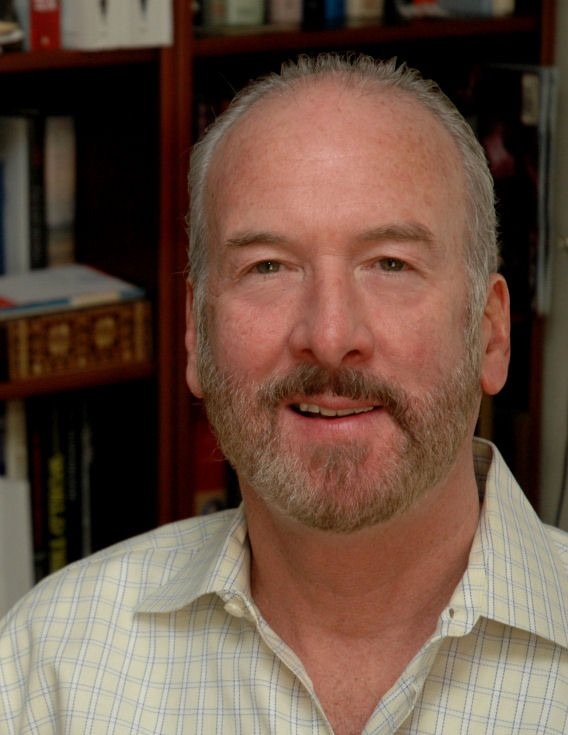
Harlow Robinson
-
Posts
6 -
Joined
-
Last visited
Recent Profile Visitors
327 profile views

Harlow Robinson's Achievements

Member (1/1)
-
 Harlow Robinson CHAPTER TWO TO THE FINLAND STATION Finland was my first foreign country. Before embarking for Leningrad, we spent a week there, staying outside Helsinki in what looked like college dormitories, nestled among the pines and birches. In my state of nearly delirious anticipation and jet lag I hardly slept at all, passing the days in a jumbled haze of impressions, lying awake at night, my heart beating fast. We took Russian language tests, and received daily briefings from a solemn posse of academic and government officials on the dangers and challenges of living in the USSR at the height of the Cold War. Soviet troops had marched into Prague just two years earlier, and the regime of Leonid Brezhnev enforced ideological conformity with a grim determination, persecuting dissidents like Andrei Sakharov and sending author and biologist Zhores Medvedev to a mental hospital. US-Soviet relations were fragile and fraught, as I was learning in my college courses on international relations. So these men in suits wanted to scare us a little, and stressed that we had better behave ourselves or the Russians we met would think badly of the United States--especially since most of them probably would never have met a real-life American before. "Remember that you are representing not only yourself, but your country," they reminded us as we sat obediently in a silent auditorium. "And be careful not to drink too much. It is an easy thing to do in Russia and can land you in trouble." At this time, I was still under the legal drinking age in Connecticut, but had considerable experience of binge-drinking at college events where beer flowed like water. Vodka, I would learn, was an entirely different thing. And much more dangerous. After the first few glasses, you felt sharp, luminous, soaring. But after the third or fourth you got wobbly and silly and dizzy. After the fifth you were in the bathroom retching up dinner. Even worse, we might get in trouble and land in a Soviet prison, a truly terrifying prospect. We felt important and apprehensive in our apparent role as citizen-diplomats. None of us wanted to start a nuclear war, or to be sent to the GULAG, of whose horrors we knew from the works of Alexander Solzhenitsyn and other reports. In our free time I explored immaculately groomed Helsinki with fellow students, marveling at the strange Baltic food (plenty of sardines) and enjoying the beer in a country with no apparent drinking age. The architecture and monuments provided ample evidence of the pervasive Russian colonial influence that had shaped (or disfigured, depending on your point of view) Finnish history and culture since the time of Napoleon. To us cheerful Americans, the Finns seemed dour, quiet and excessively reserved. They avoided eye contact as we passed on the scrubbed streets. "Don't these people ever smile?" asked my future Leningrad roommate, Walter, a handsome blonde from Princeton, smiling as he usually did. I developed a mild crush on him, but assumed he was straight, and we would go on double dates with our girlfriends in Leningrad. Years later, I found out through a mutual friend that he had come out and was gay and living in Santa Fe with his lover. We guessed that all those years of living in a tiny nation next door to gigantic and often threatening Russia made the Finns fearful and wary. Later, during our time in Leningrad, we would see busloads of Finnish tourists arriving for a weekend of cheap binge drinking (liquor was much cheaper there) that left them staggering and embracing on the sidewalks, their Nordic inhibitions overcome by Russian vodka. We were also busy figuring out who among our fellow students we liked and would want to befriend. From the start, I was drawn to Vera, a flirtatious, sunny girl with a charming crooked smile, and shining straight long blonde hair she sometimes wore in a peasant-style braid. She came from a devout Russian Orthodox family living in a Russian emigre enclave in New Jersey, and already spoke fluent Russian. The man she was dating when we met was even planning to become an Orthodox priest and wanted to marry her. (Orthodox priests can marry but only before they are ordained.) Not surprisingly, she regarded Communism with a profound loathing instilled by her parents and relatives, since the staunchly atheistic Soviet government actively persecuted Orthodox believers. Vera (her name means faith in Russian) also loved to sing Russian folk songs, and knew the Orthodox liturgical music I had been learning in the Yale Russian Chorus. We got acquainted on a boat tour around Helsinki harbor and soon became constant companions. She was also a talented artist, and would draw funny caricatures of me and our fellow students. With her by my side, I would see the USSR with a kind of double vision: as an American WASP with roots in Pilgrim New England, and as the child of nostalgic emigres forced to flee a beloved country and culture. She found it excruciating to listen to the endless propaganda lectures we would receive when we visited the magnificent palaces around the city built by the tsars. Many were still half in ruins 25 years after the Nazi assault upon the city. The guides inevitably pointed out the brutal injustice visited upon the Russian peasantry by the selfish aristocrats, and how Soviet power had brought enlightenment to the masses. When the guides started in on their ideological rants, she would give me a sad look and move to the back of the crowd. She would tell me how the members of her family had suffered under Soviet rule, and managed to leave the country, beginning difficult new lives in America. "I love Russia," she would say, "but I hate the Soviet government." With Vera I could also present myself as straight. Judging by the stern warnings of the somber men in suits, and by what I already knew about Soviet oppression of any kind of "dissidence," I knew that having a girlfriend would be helpful in this alien environment. I was in awe of her fluency in Russian, such a valuable asset, giving her the ability to "pass" as a native. But above all, I liked Vera and enjoyed spending time with her--and she reciprocated those feelings. The knowledge that I was gay I pushed to the back of my mind as an inconvenience, something to be dealt with later. For the coming months, I would also "pass" as a heterosexual, slipping into that identity that made getting along--especially here--so much easier. Vera was modest and discrete and did not make many sexual demands. We would become known as one of the summer's most recognizable and well-matched couples.
 -
STORY STATMENT COMING OUT IN MOSCOW: A COLD WAR MEMOIR Based on my experiences as a gay man in the USSR and post-Soviet Russia, the memoir covers the period from 1970 (at age 19) to 2017. During this time I made 27 different trips (some for extended periods) to the country that was America's ideological foe and "other" throughout the Cold War and beyond. Drawing upon detailed journals from nearly every trip (as student, professor, researcher, tour guide, journalist), the memoir focuses on the relationships (romantic and otherwise) I formed with gay men living in a hostile homophobic environment, and their deep bonds of fellowship. But the main theme is my own story: my struggle to come to terms with my sexuality and how these experiences in Russia helped me to find my place in the world. ANTAGONIST The antagonist is this story is not one person, but homophobia. As a young gay man growing up in the 1950s and 1960s, I faced stubborn resistance against my homosexual desires from my family and surroundings in a small New England city. Later I travelled around the world, to escape this oppressive environment, but still brought these feelings with me wherever I went. My engagement with Russia began when I was a teenager and lasted for decades after that. Ironically, it was in Cold War Moscow that I experienced some of my warmest and most successful friendships with other gay men living an underground existence. Their camaraderie inspired me. When I returned to the USA, I brought these feelings with me. My experiences in Russia helped me better understand the nature of homophobia in different cultures. In many ways the main antagonist in this story was myself, fighting against my true sexual and emotional nature. BREAKOUT TITLE: 1) COMING OUT IN MOSCOW: A COLD WAR MEMOIR This is, I believe, my strongest title, which gives a sense of what the memoir is about and the environment. 2) other possible title: HOW I FOUND SIGNS OF GAY LIFE IN MOSCOW AND THRIVED THERE 3) other possible title: ADVENTURES IN THE SOVIET GAY UNDERGROUND: A MEMOIR COMPARABLE TITLES: FIREBIRD: A MEMOIR by Mark Doty HEAVEN’S COAST: A MEMOIR by Mark Doty BECOMING A MAN: HALF A LIFE STORY by Paul Monette GAY BAR: WHY WE WENT OUT by Jeremy Atherton Lin BOOKLINE/TAGLINE Struggling to accept his gay sexuality, an American professor finds unexpected validation and love in Cold War Moscow. CONFLICTS Primary conflict: The protagonist of the memoir is struggling against his gay identity, trapped in traditional ideas and family/social heterosexual conventions from his conservative religious upbringing. Often he finds himself in social situations where homophobic remarks are made by acquittances, friends and co-workers, which provoke several anxiety and loneliness. Often this leads him to seek out dangerous anonymous sex. Secondary conflict: Difficulties in remaining part of his family, and maintaining relationships with his brothers who are reluctant to accept his gay identity and align with his parents' extremely negative reaction when he comes out to them, deepening his feelings of alienation and negative self-image, of worthlessness and "not being enough." Also conflicts in revealing his gay identity to co-workers at the university, unsure how they will react and whether it will negative impact his professional career and advancement. When she comes out to his mother, she tells him "well you can never have a career then." His father writes him that "We cannot understand why you have chosen such a sordid lifestyle." This happens at a time when he is also jilted by a boyfriend with whom he is passionately in love--worse, the boyfriend takes up with his best friend. Third conflict: bonding with gay men he meets in Moscow's underground scene, finding they are welcoming and affectionate despite the severe and dangerous obstacles to homosexuality in Soviet society. Their need to lead double lives gives him empathy and more compassion about his own struggles when he returns home to USA. SETTING The setting is Moscow and other locations in the USSR, from 1979 through the collapse of the USSR in early 1990s. Living for extended periods in Moscow and Leningrad, the protagonist/narrator dives deep into Russian/Soviet reality, learning the language and culture and music that sustains his friends in the very oppressive and spartan environment. He is in Moscow when Soviet troops invade Afghanistan in late 1979, and the USA pulls out of the Moscow Olympics, a low point in the Cold War. Later he is in Moscow during the amazing period of new freedoms during Glasnost in the late 1980s, when for the first time in Soviet history a gay liberation movement struggles to emerge. He meets with gay activists and visits gay discos and gay house parties, but sees how deeply engrained in the Russian mentality is hostility to homosexuality and fear of being different. He travels on the Trans-Siberian railroad and meets a cast of foreigners and Russians some of whom cannot believe that he is an American. He begins a relationship with a married man, the husband of his close friend, and they spend an idyllic winter weekend at the man's dacha snowbound in the countryside outside Moscow.