Art and Life in Novel Writing
 Classic and valuable archive. Misc pearls of utility, agent irritation points, plus takeaways on craft. Also, evil authors abound!

108 topics in this forum
-

- 1 follower
- 4 replies
- 4.9k views
How to prepare before sending queries to agents, e.g., utilize Publisher's Marketplace to intelligently narrow down the best possible candidates. Algonkian Writer Conferences reviews each step in turn. Here is our take on the smartest way to go about it. As a bonus, you learn a lot of insider knowledge about the business (like who is in "the club" and who is not--see below) along the way. You might also come to the realization that your ms is not yet ready. Such illumination is always a positive thing. Join Publisher's Marketplace and review it for at least a month (yes it costs a few bucks, but so what?). Search out the…
 Last reply by Kevin,
 -

- 1 follower
- 4 replies
- 826 views
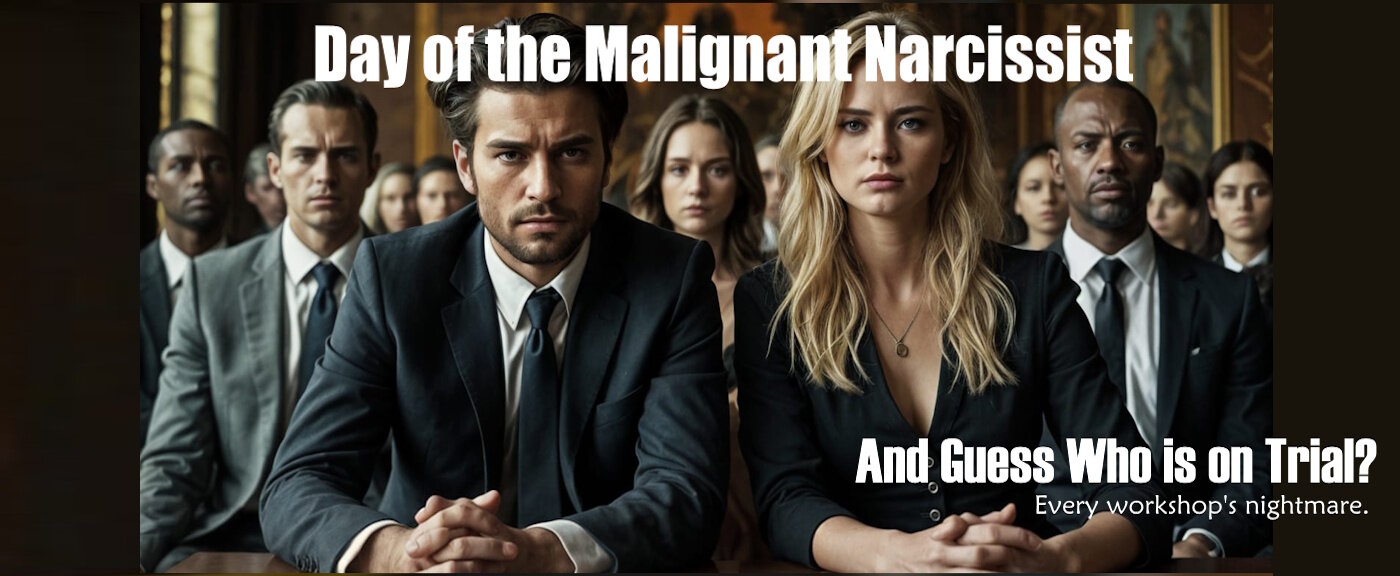
Over two and a half decades, Algonkian workshops and conference events have been subjected to at least a dozen very memorable and quite malignant narcissists, each one thin-skinned, childish, and predictably vindictive whenever confirmation of their greatness was not forthcoming. Below we meet one nightmarish example and then we proceed to examine alternative ways to defang their relentless ilk, techniques engineered to dilute their power enough to ensure future events will be less disrupted. And make no mistake, a determined and ego-wounded narcissist can wreck a workshop. Truly, they are the bane of writing teachers and workshop leaders alike. by Michael Nef…
 Last reply by Terrence Pershall,
 -
- 3 replies
- 3.2k views
From the Desk of Agent Richard Curtis ***** (Best of Writer's Edge) "The truth is that if all other things are equal, the author with better writing skills is the one who will rise out of the pack." As the stakes continue to rise in the publishing business, writers are adopting a wide range of strategies to advance themselves out of the midlist and onto better-selling plateaus. I myself have recommended a number of such strategies. Recently, however, as I respond again and again to the question of what one can do to escape midlist oblivion, it's begun to dawn on me that many writers have been ignoring the most obvious …
 Last reply by David Wollover,
 -
- 3 replies
- 4k views
Below are partitioned criteria for engaging in critique of novel-length fiction. This will help guide your writer's group and make the critique more focused and less arbitrary. Premise and Plot Does the premise or story concept sound high concept? Original? If so, why? Defend your conclusion. What makes it unique when compared to published novels or nonfiction in the genre? You must effectively argue this case for or against. If against, present examples why it might not be sufficiently original to capture the interest of an agent or publisher. Are you able to discern the primary source of dramatic tension and complication that cr…
Last reply by EditorAdmin, -
- 3 replies
- 996 views
So your agent has finally found a sympathetic editor for your wondrously impatient manuscript? And they work at a major publishing house, imprint, or press. Now you think you're in tight? Whooo! Think again. The obstacle course has just begun. Your credentials and manuscript are facing the gauntlet of THE PUB BOARD! The what? A group of chair-bound editors and professional types at the press who down or up their thumbs for the stack of proposals sitting in front of them; and it varies from place to place, but more often than not, the pub board meets once a month. They include the specific editor who is a fan of your manuscript, of co…
Last reply by Chief Editor M. Neff, -
- 2 replies
- 2k views
by Michael Neff At a conservative estimate, upwards of 250,000 writers in the U.S. are currently struggling to write or find an agent for their first commercial novel or memoir. If you understand this business, you also know why an enormous percentage are unable to make it happen. Below are the top seven reasons why otherwise passionate writers will join the 99.9% never to become commercially published. 1. INADEQUATE WRITING SKILLS AND STORYTELLING PROBLEMS In the case of the former, the writing itself does not display the energy, creativity, and polish necessary to convince an agent to go deeper. This is perhaps the number one cause of failure. Usually, t…
 Last reply by Artemis,
 -
- 2 replies
- 2.2k views
Authorial Misdemeanors - Agent Richard Curtis There seems to be a law of nature that the quality of a manuscript declines in inverse proportion to the elaborateness of its package. When I receive a manuscript bound by brass screws with a plastic embossed cover, lovingly wrapped in chamois cloth, set in a velvet-lined cedar box, shrink-wrapped, packed in turn in a fireproof strongbox secured with iron bands, I am prepared to stake my career on the likelihood that this book is one colossal dud. From time to time an author will do something that causes me to scratch my head. I've compiled a list of these foibles and offer it here with a…
Last reply by EditorAdmin, -
- 1 reply
- 3.2k views
Brilliant portrayal of the classic, ignorant narcissist who one day decides he'll soon write a bestseller despite the obvious fact he knows little or nothing about developing and writing a novel. ________________________________
Last reply by EditorAdmin, -
- 1 reply
- 3.6k views
As you explore the nooks and literary crannies here, you'll find considerable words devoted to warning you away from foolish and terrible advice. But what about professional, tested, and proven advice? Below are ten bullet points for aspiring authors designed to help them overcome any confusion or misdirection when it comes to starting the novel. However, before you investigate, make certain you've already prepared by first reading this *very* sensible prologue. Note: the list below makes an assumption that the writer is a relative novice and currently searching for direction and focus--the same stage we've all endured. For those in the second stage, or hi…
Last reply by EditorAdmin, -
- 5 replies
- 3.8k views
Have you ever been in writer workshops and reacted to criticism of your writing or story by demanding the other writer defend their decision in such detail that it served your purpose of making certain they never gave you unfavorable critique again? Hell hath no fury like a thin-skinned narcissist with a needy manuscript... But wait! Could you be one of them? In case you're not sure if your skin qualifies, Algonkian psychologists have developed a few skin test questions below. Feel free to respond honestly to yourself as you read each one. Everyone wishes to avoid time-wasting instances of Offended Writer Syndrome (OWS) that often takes place in writer wor…
Last reply by Chief Editor M. Neff, -

- 3 replies
- 1.5k views
THE WRITING LIFE by Annie Dillard 1. How did the book help you as a writer? What overall aspects of it taught you something? As a visual artist for over forty years, I have always known that art is challenging. The art of writing is no different. Writing is hard. THE WRITING LIFE by Annie Dillard confirmed that mantra. Writing is hard. Good writing even more so. It takes discipline, tenacity, and a thick skin. Just like Dillard and thousands of other writers, I struggle with writing. As Dillard stated, “... it is a lion growing in strength. You must visit it every day and reassert your mastery over it. If you skip a day, you are, quite rightly, afraid to …
Last reply by RobertSteedman, -
- 2 replies
- 4.4k views
A subject that often goes by the wayside until too late. People say, I write for myself, and it sounds so awful and so narcissistic, but in a sense if you know how to read your own work—that is, with the necessary critical distance—it makes you a better writer and editor. When I teach creative writing, I always speak about how you have to learn how to read your work; I don’t mean enjoy it because you wrote it. I mean, go away from it, and read it as though it is the first time you’ve ever seen it. - Elissa Schappell ____________ Twenty years, several novels, a room full of edited manuscripts, and hundreds of workshops late…
Last reply by Chief Editor M. Neff, -

- 2 replies
- 3.1k views
BOOK REPORTS "The Art of Fiction" by John Gardner 1. How did the book help you as a writer? What overall aspects of it taught you something? It reinforced for me some vital components that must permeate the book throughout. For example, the story development must continuously cast forwards, drawing the reader from paragraph to paragraph, from scene to scene. Any let up and the reader can stop caring where the story will go next, at which point the writer has failed, and the reader stops reading. This was particularly important for me to get in my head in the early scenes when I move from place to place, character to character. I had initially focuse…
Last reply by EditorAdmin, -
- 2 replies
- 2k views
What should be percolating in the aborning author's mind from the very start? Purpose and Passion A few basic questions first. Why are you writing a novel? For reasons of ambition or ego? Well, why not? Most of us, in one way or another, nourish the ego. We want recognition, validation, a chance to prove our ability to others and thereby rise above. In truth, we may need to prove something to ourselves, or more simply, gain a degree of independence from an unsatisfactory mode of existence. We might require purpose, a sacred mission, a desire to fill our lives with a pursuit that restores us to life, and what better way to achieve than by writing a novel? …
Last reply by Artemis, -
- 2 replies
- 3.1k views
Note this does not include a long story pitch or short synopsis (which will sink you if you don't know how to artfully write it), but rather a single hook line (which will also sink you for the same reason). Note that comparables (at least two) are vital to your novel. Dear Mr. or Ms. (name of agent): ( Open by noting you saw a relevant deal they concluded on PM. It marks you as a true professional. ) I noted in Publishers Marketplace that you represented XYZ Title to ABC Publisher, and I am querying because I have recently completed a novel that might work for your list. You may recall that we met at the XYZ conference [if this is relevant] and thank y…
Last reply by Chief Editor M. Neff, -
.thumb.jpg.fab15a14084b2920f0e0aea5a9994cde.jpg)
- 1 reply
- 5k views
I suspect that most writers have “Get Published” on their list of goals for the year. Given that this assumption is correct (and I’m pretty sure it is), I’m dedicating this week’s post and next week’s to getting published and what to expect in the process. Whether you’re looking into the traditional route or self-publishing, I’ve got something for everyone. Without further ado, here are my top five picks for this week: #1: Podcast 365. Sunrise, Sunset, and Behind the Scenes in Publishing: Hanging out with Abby Zidle Abby Zidle is the senior editor and associate director of marketing at Gallery Books. While this podcast is mostly geared toward the romance genre, …
 Last reply by Kathy LaFollett,
 -
- 1 reply
- 3.6k views
It’s here! The much anticipated second part to getting published. These articles will round out the information you already got in Part 1, but also give you more to consider when picking your publishing path. Ready or not, here are my top picks for the week: #1: How to Secure a Traditional Book Deal By Self-Publishing Jane Freidman brings up a lot of really good points about why, or why not, a writer should ever consider doing this. I warn you, going this route is not for the faint of heart. I’ll let Jane explain why. #2: Friday Speak Out!: No More Query Letters Why one woman decided—only after many years of writing—that the traditional publishing care…
 Last reply by elisehartkipness,
 -
- 1 reply
- 2.8k views
You begin your first novel with equal parts ignorance and false optimism. Many months, or even years later, you finally learn the enormity of your mistakes. Those popular writer magazines and the sociable little group of amateur writers that looked like a great plan, at first, now appear unreliable and even time wasting. At this juncture, you will either deny reality, quit altogether, or else vow to become a true and humble apprentice to the art of novel writing. Ne confondez jamais une seule défaite avec une défaite finale. - F. Scott The process above is nearly inevitable for the vast majority of aspiri…
Last reply by Chief Editor M. Neff, -
- 1 reply
- 1.8k views
Last reply by EditorAdmin, -
- 1 reply
- 2.3k views
By Chris Stewart As someone who organizes readings and a large literary arts festival with workshops, author appearances, and exhibitors, I have developed a list of writers who I will not work with again. And rest assured, I’m not the only one who does this. Why? Because they didn’t follow directions. It’s that simple. Who's on it? Writers who acted like the organizer/staff were their personal assistant/manager. Take note of the following ways to avoid this blacklist and be a true professional! KNOW YOUR OWN SCHEDULE Double booking is such a big no-no we can’t believe you’re not aware of this already yourself. Whatever you have to do to make sure you …
Last reply by Chief Editor M. Neff, -
- 1 reply
- 2.2k views
Several times a year I'll receive an email from a memoir writer wanting to know if attending one of our writer events is worth it. The answer is always a mixed bag depending on several factors; however, for purposes of meaningful sample, I've decided to include a recent response to a concerned memoir writer who inquired about the potential of the Write to Pitch Conference to support her ambitions and assist in promoting her life story. Dear Madeline, You appear to desire real honesty, so I'll take a chance and provide you with that. As you read what I have to say, keep in mind that I respect memoir writers for having the courage to tell their st…
Last reply by EditorAdmin, -
- 1 reply
- 2k views
Are "brutal" reviewers really good for you? So what spurred this question? A friend recently said she had a "brutal critique partner" that could be relied on. It got me to thinking about brutal reviewers in my own experience who were worse than useless and actually destructive. We need to keep in mind that the better an ms becomes, the harder such "brutal" critics are forced to dig for critique at all costs, inevitably focusing on matters of taste, e.g, "I don't like that character's personality..." as opposed to "I think this point could be made clearer by doing XYZ." You could put 10 of these brutal negative types in a room and they would shred an unpublished no…
Last reply by Chief Editor M. Neff, -
- 1 reply
- 2.1k views
These bullets of advice for writers in all genres were taken from a review of the SFF author Brandon Sanderson on the video forum and they're worth repeating here for emphasis: The concept of "borrowing" or getting story ideas, entire structure, or themes from other books or films can't hurt and might actually lead to publication; but I maintain you step carefully. The concept may already be overdone, a stale trope. His advised method of transposing the "structure" of one type of genre novel onto another can be productive--reminiscent of Italian writers in the old days transposing Japanese samurai scripts into spaghetti westerns. Another good example is the …
Last reply by Chief Editor M. Neff, -
- 1 reply
- 2.1k views
by Michael Neff Very Important Questions to Ask Yourself So you're searching high and low for a decent and experienced freelancer to read your novel ms and provide it with the healing touch it needs. You most likely will require thorough developmental editing, not to mention narrative or sample line edits at a minimum. Okay. So where to go? There are Google pages full of poor editorial services out there and just about anyone can claim to be a novel editor. Therefore, how to winnow forth the quality expertise you must have? Below are a few questions to ask yourself before engaging any editorial service: Do you get to review the credentials…
Last reply by Chief Editor M. Neff, -
- 1 reply
- 2.3k views
By Richard Curtis If you do something so horrendous as to provoke your agent to declare, "Life is too short," you'd better start looking for someone else to handle your work. It means you have tried his or her patience beyond its limit. You're a walking dead author. We recently described good timing as one of the most important virtues a literary agent can bring to the job. There's another that most good agents possess, and that's patience. If timing is the art of "when to," patience is the art of "when not to." Unfortunately, that often means when not to knock my head against a wall, wring an author's throat, or hop in a taxi, race over to a publisher's office…
Last reply by Chief Editor M. Neff,


ALGONKIAN SUCCESS STORIES
What should you accept as credible?
Where it All Began