Art and Life in Novel Writing
 Classic and valuable archive. Misc pearls of utility, agent irritation points, plus takeaways on craft. Also, evil authors abound!

108 topics in this forum
-

- 2 replies
- 4.4k views
A subject that often goes by the wayside until too late. People say, I write for myself, and it sounds so awful and so narcissistic, but in a sense if you know how to read your own work—that is, with the necessary critical distance—it makes you a better writer and editor. When I teach creative writing, I always speak about how you have to learn how to read your work; I don’t mean enjoy it because you wrote it. I mean, go away from it, and read it as though it is the first time you’ve ever seen it. - Elissa Schappell ____________ Twenty years, several novels, a room full of edited manuscripts, and hundreds of workshops late…
 Last reply by Chief Editor M. Neff,
 -
.thumb.jpg.fab15a14084b2920f0e0aea5a9994cde.jpg)
- 0 replies
- 2.4k views
Writing Hacks. Are they helpful or hurtful? I, for one, have never cared for the word hack in this instance because it makes it sound like you are potentially BS-ing your way through your writing goals, thus leaving your integrity at the door. I’ve also never really understood the entire “hacking” trend because in so many instances they are just using the word hack in place of the words tip or advice. However, with all that being said, we’ll say that hacking is a good thing for our purposes today because it helped me find some new techniques for novel writing that I couldn’t have found any other way. So, here are my top five writing “hacks” for the week (the titles are pr…
Last reply by KaraBosshardt, -
- 0 replies
- 2.1k views
My very first manuscript was horribly cliché and pretty much plotless. In fact, it didn’t even have an ending to it. I never bothered writing one. It was clear to me that by 80,000 words there was no point in wasting my time on devising a resolution because there was never even a climax. It literally turned into one very lengthy exercise in getting to know my main characters—because I hadn’t bothered doing that before I started to write my novel. And this was okay at the time. I was brand new to creative writing and I just wanted to test my hand at being a writer since I’d never done anything like it before, unless you count the horrible required writing assignments in En…
Last reply by KaraBosshardt, -
- 0 replies
- 2.4k views
When it comes to my all-time favorite fictional character it will always and forever be Andrew Wiggins, better known as Ender. I have loved fictional stories ever since I could read. I especially love fantasy and sci-fi. However, I had never really connected with a main character very deeply in a novel until I read Ender’s Game, by Orson Scott Card, when I was in the latter part of Junior High school. I have since read that story multiple times and my 14-year-old self connects just as deeply every time. Every author’s dream, right, to have their stories cherished for decades? But why did I completely fall in love with this particular character? I was a teenage girl w…
Last reply by KaraBosshardt, -
- 0 replies
- 1.9k views
Truthful, authentic, honest. All these words mean roughly the same thing, but in this case, I’ve chosen these words to describe writers and the stories they create. I’m sure you’ve all heard phrases such as “find your own authentic voice,” or “write your truth,” or “be true to your craft.” Or even “be honest with your readers.” I realize that these phrases are ambiguous at best and are usually tossed around at writing conferences to make a speaker sound like they know what they are talking about. So…what am I getting at? To be honest in what you are writing, or to be truthful in the story that you create means showing a side of yourself that you may not want to. To b…
Last reply by KaraBosshardt, -
- 0 replies
- 1.2k views
Conflict should be at the very heart of every story you write. Its presence throughout your manuscript, or lack thereof, can literally make our break your ability to get published. Your main characters need internal conflict, they need conflict between themselves and other characters (more than just the conflict raised by the antagonist). There should also be conflict within the setting of your novel like a picturesque countryside that isn’t entirely what it seems, etc. etc. etc. Without conflict, or tension or raised stakes for the main characters, beginning with the first scene and ending with the resolution, stories meander, they are quiet and your readers get bor…
Last reply by KaraBosshardt, -

- 0 replies
- 2.3k views
The Art of Fiction, by John Gardner 1. One of the major lessons I learned from Gardner’s work was that all questions I raise within a text, I must answer. Otherwise, it leaves the reader feeling dissatisfied. Upon reflection, I discovered that all of my favorite works follow this guideline.They wrap up every individual character’s storyline and identify any unknowns/solve any mysteries by the end of the story. For example, in Les Miz Hugo wraps up the storyline for not only Valjean, but for Cossette, Marius, Javert, Eponene, Gavroche, and even the Master and his wife. They don’t all have happy ends, but they all have definitive conclusions to their stories. …
Last reply by Mikaela Kemsley, -
- 0 replies
- 2k views
Creating your author’s platform can be both exhilarating and nerve-wracking, and for good reason. There’s lots to worry about. What do I say about myself? What photo of me looks the best? What if I’m nowhere near close to being published? Do I start with a website first, or a presence on social media? Rest assured that all these questions, and more, get answered in my top picks of the week: #1: Your Author Platform – Is it Ever too Soon to Start? The short answer is no. It is never too soon to start and I’ll let Karen Cioffi explain why. #2: Do I Need a Platform and If So, How High? Are you an expert on what you’re writing about? This article gives tip…
Last reply by KaraBosshardt, -
- 0 replies
- 2.4k views
Have you ever had a hard time figuring out what genre your story fits into? Or, maybe you know the genre of your story, but you don’t know how to structure it. Perhaps your book keeps switching from one genre to the next depending on which chapter you’re writing. If genre is feeling a bit hazy for you, or if you just want to understand it better then this week’s picks are for you: #1: Tinker, Tailor, Wizard, Spy: The Joys (And Dangers) of Blending Genre Elements W.L. Goodwater states, “When readers browse the genre shelves at the bookstore, they are looking to sign a contract with the writer: I, the undersigned, will purchase and read this book, but only under t…
Last reply by KaraBosshardt, -
- 1 reply
- 3.6k views
It’s here! The much anticipated second part to getting published. These articles will round out the information you already got in Part 1, but also give you more to consider when picking your publishing path. Ready or not, here are my top picks for the week: #1: How to Secure a Traditional Book Deal By Self-Publishing Jane Freidman brings up a lot of really good points about why, or why not, a writer should ever consider doing this. I warn you, going this route is not for the faint of heart. I’ll let Jane explain why. #2: Friday Speak Out!: No More Query Letters Why one woman decided—only after many years of writing—that the traditional publishing care…
 Last reply by elisehartkipness,
 -
- 1 reply
- 5k views
I suspect that most writers have “Get Published” on their list of goals for the year. Given that this assumption is correct (and I’m pretty sure it is), I’m dedicating this week’s post and next week’s to getting published and what to expect in the process. Whether you’re looking into the traditional route or self-publishing, I’ve got something for everyone. Without further ado, here are my top five picks for this week: #1: Podcast 365. Sunrise, Sunset, and Behind the Scenes in Publishing: Hanging out with Abby Zidle Abby Zidle is the senior editor and associate director of marketing at Gallery Books. While this podcast is mostly geared toward the romance genre, …
 Last reply by Kathy LaFollett,
 -
- 0 replies
- 1.3k views
The Art of Fiction While rewriting my manuscript (from basically a clean slate), I've been more mindful of making my current draft publishable. The learning curve in doing so has been necessary and useful, yet my progress on this draft (as opposed to my original) has unfortunately been much slower. John Gardner's advice not to sacrifice your writing's "delight" was helpful, as that's one of my motivating factors when writing (and one that is sometimes lost when I feel overwhelmed about strategically perfecting something as opposed to simply writing it). Gardner reiterated that good writing should shift in and out of various POV's, as opposed to limiting the na…
Last reply by WendyDRV, -
- 0 replies
- 1.3k views
A WATERSHED EVENT FOR SERIOUS WRITERS Whatever the stage of your project or writing life, know that all writers, if they desire to become commercially published, must see and enter the Epiphany Light. First of all, what is the "Epiphany Light"? The EL is a state of mind crucial to any aspiring author desirous of commercial or serious literary publication, and one which clearly divides the 99% from the 1% of those who've learned the hard way how challenging it is to have their expertise and projects taken seriously by professionals in the publishing business. But are the percentages so drastic as depicted here? Yes, and probably even more so. Consider …
Last reply by Chief Editor M. Neff, -
- 0 replies
- 1.3k views
When it comes to rewriting, a writer must make hard choices. Fitzgerald warned us writers about the danger of becoming way too attached to something you’ve written. "Keep an objective eye on the whole piece," he says, "and if something isn’t working get rid of it." In a 1933 Saturday Evening Post article titled “One Hundred False Starts,” he writes: I am alone in the privacy of my faded blue room with my sick cat, the bare February branches waving at the window, an ironic paper weight that says Business is Good, my New England conscience–developed in Minnesota–and my greatest problem: “Shall I run it out? Or shall I turn back?” Shall I say: “I know I had so…
Last reply by Chief Editor M. Neff, -
- 2 replies
- 2k views
What should be percolating in the aborning author's mind from the very start? Purpose and Passion A few basic questions first. Why are you writing a novel? For reasons of ambition or ego? Well, why not? Most of us, in one way or another, nourish the ego. We want recognition, validation, a chance to prove our ability to others and thereby rise above. In truth, we may need to prove something to ourselves, or more simply, gain a degree of independence from an unsatisfactory mode of existence. We might require purpose, a sacred mission, a desire to fill our lives with a pursuit that restores us to life, and what better way to achieve than by writing a novel? …
 Last reply by Artemis,
 -
- 1 reply
- 2.8k views
You begin your first novel with equal parts ignorance and false optimism. Many months, or even years later, you finally learn the enormity of your mistakes. Those popular writer magazines and the sociable little group of amateur writers that looked like a great plan, at first, now appear unreliable and even time wasting. At this juncture, you will either deny reality, quit altogether, or else vow to become a true and humble apprentice to the art of novel writing. Ne confondez jamais une seule défaite avec une défaite finale. - F. Scott The process above is nearly inevitable for the vast majority of aspiri…
Last reply by Chief Editor M. Neff, -
- 5 replies
- 3.8k views
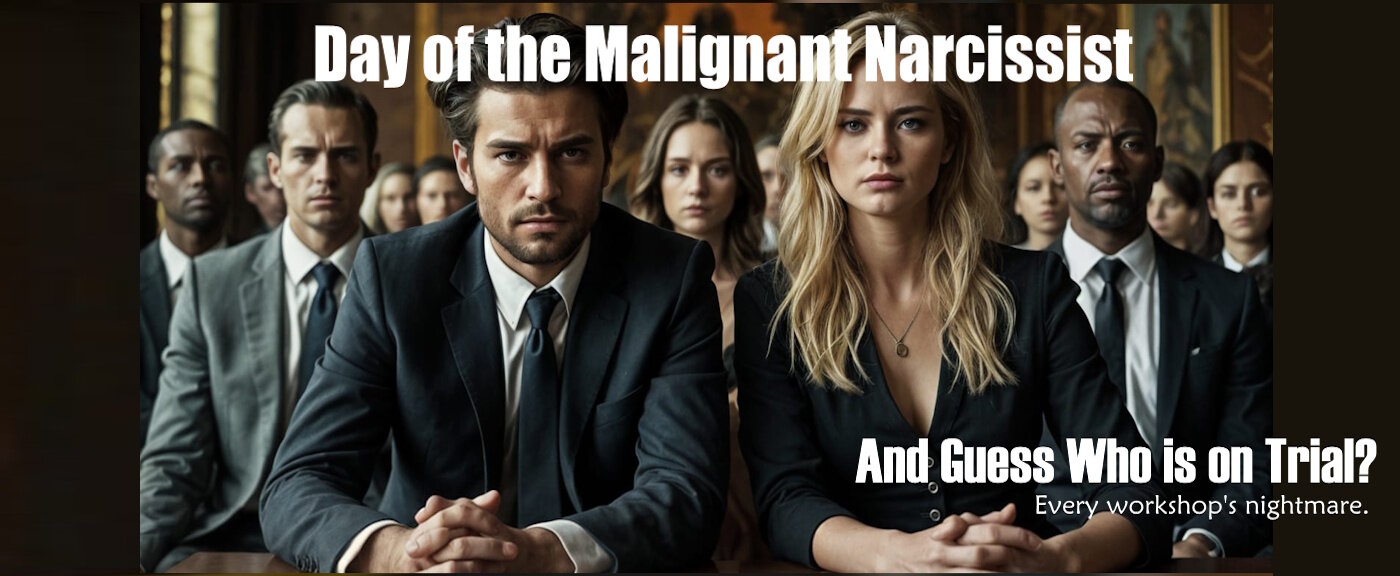
Have you ever been in writer workshops and reacted to criticism of your writing or story by demanding the other writer defend their decision in such detail that it served your purpose of making certain they never gave you unfavorable critique again? Hell hath no fury like a thin-skinned narcissist with a needy manuscript... But wait! Could you be one of them? In case you're not sure if your skin qualifies, Algonkian psychologists have developed a few skin test questions below. Feel free to respond honestly to yourself as you read each one. Everyone wishes to avoid time-wasting instances of Offended Writer Syndrome (OWS) that often takes place in writer wor…
Last reply by Chief Editor M. Neff, -
- 0 replies
- 1.1k views
Authorial Misdemeanors - Agent Richard Curtis There seems to be a law of nature that the quality of a manuscript declines in inverse proportion to the elaborateness of its package. When I receive a manuscript bound by brass screws with a plastic embossed cover, lovingly wrapped in chamois cloth, set in a velvet-lined cedar box, shrink-wrapped, packed in turn in a fireproof strongbox secured with iron bands, I am prepared to stake my career on the likelihood that this book is one colossal dud. From time to time an author will do something that causes me to scratch my head. I've compiled a list of these foibles and offer it here with a light heart. If you hav…
Last reply by Chief Editor M. Neff, -
- 0 replies
- 1.4k views
Typical Panel of Dubious Worth Below, we've assembled a list of the best writer conferences currently available. But before choosing one over the other, keep in mind your goals as a writer. Where do you want to be as a commercial author five years from now? And consider asking yourself these questions also: Do I know how to properly pitch a project? Will I settle for self-publishing or no? Do I know precisely what genre I'm writing in, and is the genre found on the shelf, searchable as a category on Amazon? Do I know my comparables and how to best choose them? Have I immersed in my chosen genre well enough t…
Last reply by Chief Editor M. Neff, -
- 0 replies
- 1.1k views
By Richard Curtis Traduttore, Traditore ("The translator is a traitor") - Italian proverb My client thinks your editor is so incompetent, he couldn't spell "cat" if you spotted him the C and the T! One of the critical roles literary agents play is that of translator. We perform the task on several author. The writer who sells his first book to a publisher and reads his first contract is plunged into a sea of words that may be totally unfamiliar to him, or that are used in a totally unfamiliar way. "Force majeure," "net proceeds," "matching option," "warranty," "discount" - these need to be defined for the novice author. There are many difficult concept…
Last reply by Chief Editor M. Neff, -

- 2 replies
- 3.1k views
BOOK REPORTS "The Art of Fiction" by John Gardner 1. How did the book help you as a writer? What overall aspects of it taught you something? It reinforced for me some vital components that must permeate the book throughout. For example, the story development must continuously cast forwards, drawing the reader from paragraph to paragraph, from scene to scene. Any let up and the reader can stop caring where the story will go next, at which point the writer has failed, and the reader stops reading. This was particularly important for me to get in my head in the early scenes when I move from place to place, character to character. I had initially focuse…
Last reply by EditorAdmin, -

- 0 replies
- 1.3k views
Ben Chewey Reaction to Algonkian Novel Writing Program Readings The Art of Fiction by John Gardner 1. How did the book help you as a writer? What overall aspects of it taught you something? The Art of Fiction helped me as a writer by introducing me to the concept of aesthetic interest. Since the start of my writing career I was aware of the importance of a story having a cast and setting that stands out. John Gardner made it clear why it's important for every aspect of one's story to be organic, or at least as organic as possible from something that does not actually exist. 2. What two or three major lessons did you learn from the book …
Last reply by BenChewey, -

- 0 replies
- 1.2k views
"The Art of Fiction" by John Gardner (a great primer for this commercial program) "Writing the Breakout Novel" by Donald Maass (another good primer) "Write Away" by Elizabeth George (a no nonsense primer, and humorous) "The Writing Life" by Annie Dillard (a look at the struggle) The Art of Fiction by John Gardner 1. How did the book help you as a writer? What overall aspects of it taught you something? What spoke to me the most regarding this book was the focus on the authenticity of a story. As well as the focus on "feeling" giving rhythm to sentences. It caused me to go back and look at my sentence variation. Was I using fragment…
Last reply by MelissaSeligman, -

- 0 replies
- 1.2k views
THE ART OF FICTION by John Gardner 1. This book is startlingly basic in both its description of what fiction is and what the writer needs to do. It makes me want to write, to use the power within me to reach out to others, expressing what really matters to me, and hopefully to them also. 2. The primary lessons I learned: structure is paramount - be aware of each word chosen, each sentence structured, each paragraph and scene, as elemental building blocks of character and plot, therefore of the story. Above all else, plausibility: make the fiction so real that the reader lives and breathes within it. My novel, THE BRAID, being a serious (living, breathing) matter …
Last reply by MaryEllen, -

- 0 replies
- 1.3k views
The Art of Fiction 1. How did it help me as a writer? Throw away details that are not necessary. Even as a writer who dislikes excessively long books, it's easy at times when writing our own stuff to have fun "playing" with details in the story that might bore others. 2. Two or three major lessons I learned from it? Writing is like any other art form, break the old, traditional rules if you can do it in a way that makes the art more beautiful. And the idea of not overexplaining what a character is thinking. THAT is something that's very easy to do when writing in the third person, and it's a good reminder to show, not tell, even in third person POV. 3. Anyt…
Last reply by Heather_L_Benton,


ALGONKIAN SUCCESS STORIES
What should you accept as credible?
Where it All Began